
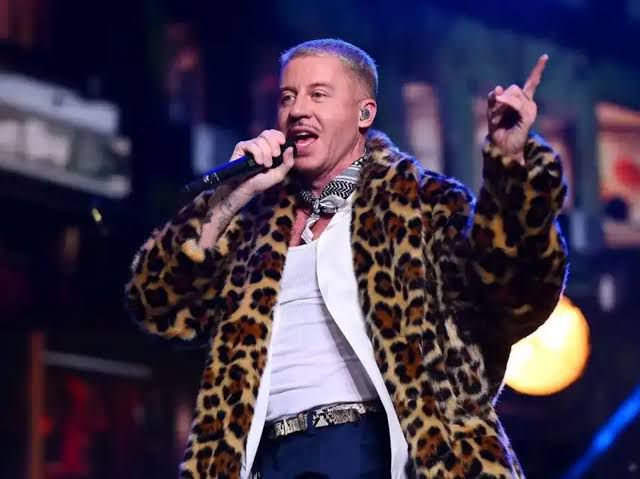
The Grammy-winning rapper names Madison Square Garden, Crypto_com Arena and seven other major venues in a lengthy public statement, alleging that previously discussed concert dates were withdrawn after organisers disclosed the tour’s fundraising purpose.
American rapper and songwriter Macklemore has publicly accused nine major entertainment arenas across the United States of refusing to accommodate his planned Free Palestine benefit tour, raising fresh questions about the relationship between artistic expression, commercial entertainment and political advocacy.
The 43-year-old musician, whose real name is Benjamin Hammond Haggerty, made the allegations in an extensive statement published on his Instagram account on Friday, November 6, 2026.
According to the rapper, his team had been working to bring the benefit tour to the United States following three successful performances in Europe. However, he claimed that discussions with nine prominent American venues failed after their management teams became aware that the concerts were intended to raise funds for organisations supporting Palestinians.
The venues named in his statement include Madison Square Garden, Prudential Center, Barclays Center, UBS Arena, Intuit Dome, Kia Forum, Crypto.com Arena, Chase Center and Climate Pledge Arena.
Macklemore explained that his team had received information about available performance dates at the venues by the middle of September, with opportunities extending through the end of 2026.
However, he alleged that the proposed arrangements changed once the venues understood the purpose of the concerts.
In his statement, he described the experience as unprecedented in his more than 20 years in the music industry, arguing that the circumstances surrounding the proposed performances raised concerns about the opportunities available to musicians who use their platforms to support humanitarian causes.
Nine Major Entertainment Venues Named
The list of venues identified by Macklemore represents some of the most recognisable entertainment destinations in the United States.
Madison Square Garden and Barclays Center are major concert and sporting destinations in the New York metropolitan area, while Prudential Center serves audiences in Newark, New Jersey. UBS Arena is another prominent entertainment facility in the wider New York region.
In California, the rapper identified Intuit Dome, Kia Forum and Crypto.com Arena, three major venues serving the Los Angeles entertainment market.
He also named Chase Center in San Francisco and Climate Pledge Arena in Seattle.
The geographical spread of the venues makes the development particularly significant for the proposed American leg of the tour, as the locations cover several important entertainment markets across the country.
However, the allegations remain Macklemore’s account of the booking discussions, and the circumstances surrounding each venue’s decision are not necessarily identical.
A spokesperson for Madison Square Garden Entertainment disputed the rapper’s characterisation, telling PEOPLE that the venue had extremely limited availability and that Macklemore was not an arena-level act.
This response introduces a commercial and operational dimension to the discussion, particularly concerning how major entertainment facilities evaluate potential performances, audience demand and available dates.
Representatives of the other venues were also approached for comments by entertainment publications.
European Success Inspired the Planned American Tour
Before announcing the difficulties surrounding the American dates, Macklemore had completed three performances under the Free Palestine benefit tour banner in Dublin, London and Paris.
The rapper described the European concerts as some of the most meaningful performances of his career, expressing appreciation to audiences, musicians, activists and other participants who contributed to the events.
The shows attracted substantial participation, with reports describing the European performances as sold-out events that brought together thousands of people from different backgrounds.
The tour also featured contributions from more than 40 artists and speakers, creating an environment that combined music, humanitarian advocacy and public engagement.
Macklemore explained that the original intention was to extend the same initiative to American audiences, allowing supporters in the United States to participate in the fundraising activities.
The European performances therefore represented more than a series of ordinary music concerts. They provided a platform for artists and organisers to combine entertainment with fundraising and discussions surrounding the humanitarian situation affecting Palestinians.
The proposed American extension was expected to continue that approach, although the latest announcement indicates that the original arena-based plans have encountered significant difficulties.
Macklemore Connects the Development to Freedom of Expression
A central theme of Macklemore’s statement was the relationship between freedom of expression and the ability of entertainers to communicate their personal convictions through their professional platforms.
The rapper argued that musicians, writers, activists and other public figures who express solidarity with Palestinians have faced professional consequences over the years.
He also reflected on his own experiences during the past three years, explaining that he had previously considered remaining publicly quiet about certain personal challenges so that attention would remain focused on the humanitarian situation in Palestine.
However, he now believes that discussing the treatment of artists who speak about the issue is also an important part of the wider conversation.
Macklemore questioned whether a country that places considerable importance on freedom of speech should have an entertainment environment where commercial interests influence which causes receive public platforms.
His argument centred on the idea that artists should be able to participate in humanitarian advocacy without automatically losing professional opportunities because of the causes they support.
Nevertheless, the situation also highlights the complicated relationship between privately operated entertainment facilities, commercial booking arrangements and the expressive interests of performers.
While artists may regard concerts as opportunities to communicate personal convictions and raise funds for charitable causes, venue operators also make decisions based on scheduling, commercial considerations, event policies and other operational requirements.
The different perspectives make the controversy an important development in the continuing discussion about artistic independence within the American entertainment industry.
Previous Controversy Involving Ed Sheeran’s Tour
The latest development follows another major controversy involving Macklemore and British singer-songwriter Ed Sheeran.
In September 2026, Macklemore was removed from the supporting lineup of Sheeran’s Loop Tour following his public expressions of support for Palestine during a performance at MetLife Stadium in New Jersey.
The development attracted considerable attention because of the disagreement surrounding the circumstances of his departure.
Sheeran subsequently clarified that Macklemore’s contractual arrangement was with the tour promoter rather than directly with him.
He explained that the decision was not his and acknowledged the wider humanitarian and free-expression issues surrounding the situation.
The controversy generated further discussions among music followers, particularly concerning the responsibilities of major performers, concert promoters and venue operators when dealing with politically sensitive issues.
Macklemore later established the Free Palestine benefit tour, which provided an opportunity to redirect his professional activities towards fundraising and humanitarian advocacy.
His latest statement suggests that the difficulties surrounding the American arena bookings have become another chapter in the ongoing debate.
A New Direction for the Free Palestine Benefit Tour
Despite the reported difficulties, Macklemore has made it clear that the fundraising initiative will continue.
In his November 6 statement, the rapper announced his intention to work with other artists and organisers to arrange additional performances.
He suggested that future events could take place outside conventional arena settings, potentially creating independent performance spaces that would allow the initiative to continue without relying exclusively on major commercial entertainment facilities.
This approach could introduce alternative opportunities for organising benefit concerts, including outdoor performances, independent venues, community events and collaborations with humanitarian organisations.
It could also create opportunities for emerging musicians and established performers who wish to participate in fundraising activities.
Macklemore reaffirmed his commitment to supporting Palestinians and raising funds through music, emphasising that the proposed venue difficulties would not bring the initiative to an end.
His statement concluded with a message about the importance of building independent platforms and maintaining public participation in humanitarian causes.
The Wider Impact on the Entertainment Industry
The controversy surrounding Macklemore’s proposed American tour has brought renewed attention to the influence of commercial entertainment operators in determining which performances take place at major venues.
Large arenas are important components of the international music industry. They provide infrastructure for major concerts, generate employment, support local businesses and attract audiences from different regions.
Consequently, access to these facilities can be significant for artists seeking to organise large-scale performances.
For musicians involved in humanitarian campaigns, the availability of suitable venues can also influence the amount of money raised, the number of people reached and the visibility of the causes being supported.
The development raises important questions about how entertainment businesses balance commercial responsibilities, event policies and the expressive interests of performers.
It also highlights the growing use of music as a platform for conversations about international humanitarian issues.
Over the years, musicians have participated in benefit concerts, fundraising campaigns and public awareness initiatives addressing poverty, conflict, natural disasters and other humanitarian challenges.
Macklemore’s proposed tour fits within this broader tradition of artists using their popularity and creative influence to support causes beyond the entertainment industry.
For now, the future of the American leg of the Free Palestine benefit tour remains uncertain.
Macklemore has indicated that discussions with other artists and organisers will continue, with plans to identify alternative locations for upcoming performances.
The response from the named venues, particularly clarification of the individual circumstances surrounding their booking decisions, will also be important in understanding the full picture.
Meanwhile, the successful European performances demonstrate that the initiative has attracted audiences willing to participate in music events organised around humanitarian fundraising.
The rapper’s latest announcement has therefore shifted attention from the original concert arrangements towards the wider questions of artistic independence, commercial venue management and the role of entertainment in humanitarian advocacy.
Ultimately, Macklemore’s decision to continue pursuing the benefit tour indicates that his fundraising ambitions remain active despite the reported challenges in securing major American arenas.
As discussions continue, the development is likely to remain an important talking point among music fans, entertainment professionals and observers interested in the relationship between music, public expression and humanitarian responsibility.

