
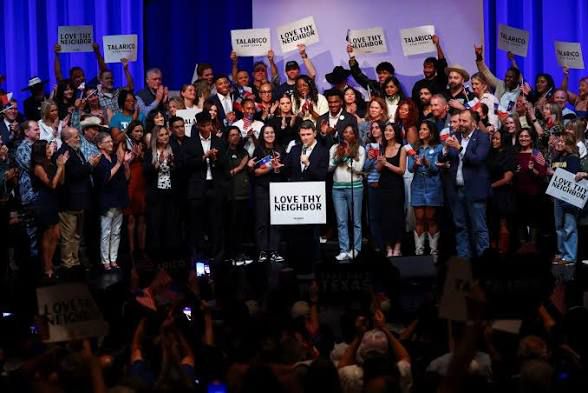
The Democratic Party’s sweeping victory in the November 3 United States midterm elections could significantly reshape the direction of the ongoing US-Iran war, placing President Donald Trump’s military strategy under increased congressional scrutiny and potentially changing how Washington finances, manages and ultimately approaches the conflict.
By securing control of both the House of Representatives and the Senate, Democrats have gained considerable influence over America’s legislative and financial decisions. Their victory comes amid growing public concerns about the economic and security implications of the war, making Iran one of the most consequential foreign policy issues confronting the Trump administration.
The election outcome has already generated discussions among Democratic lawmakers about using congressional authority to restrict funding for military operations against Iran and establish greater legislative oversight of the president’s decisions.
Senate Democratic leader Chuck Schumer has indicated that his party intends to work towards ending the war, while prominent lawmakers, including Senator Chris Van Hollen and Representative Ro Khanna, are advocating a more direct approach through congressional spending powers.
The development raises an important question: Could Democratic control of Congress become the turning point that changes America’s military engagement with Iran?
1. DEMOCRATS COULD USE CONGRESSIONAL FUNDING POWERS TO RESTRICT THE WAR
One of the most significant consequences of the Democratic victory is the party’s increased control over federal spending decisions.
Under the American constitutional system, Congress controls government appropriations, including funding for the Department of Defense and military operations.
Although the president serves as commander-in-chief, military campaigns require financial resources that Congress plays a central role in authorising.
Democratic lawmakers are already considering using this authority to prevent additional federal money from supporting combat operations against Iran.
Senator Chris Van Hollen and Representative Ro Khanna have emerged as prominent advocates of restricting war funding.
Their proposal includes introducing provisions into government spending legislation that would prevent appropriated funds from being used for military operations in Iran without congressional authorisation.
The strategy could create significant pressure on the White House because continuing a military campaign requires sustained financial support.
The federal government’s funding deadline of December 11, 2026, could provide an early opportunity for lawmakers to debate restrictions.
However, Republicans will retain control of Congress until the newly elected members assume office in January 2027, meaning the most significant legislative confrontation may come after the transition.
Why this matters: If Democrats successfully restrict funding, the Trump administration could face greater difficulty sustaining its current military strategy without negotiating with Congress.
2. TRUMP’S MILITARY AUTHORITY COULD FACE GREATER CONGRESSIONAL OVERSIGHT
The Democratic victory also changes the balance of political oversight in Washington.
From January 2027, Democrats will control important congressional committees responsible for defence, foreign affairs, intelligence and government spending.
These committees possess investigative powers that could be used to examine the administration’s decisions surrounding the Iran conflict.
Possible areas of investigation include:
The financial cost of military operations against Iran.
The legal justification for initiating and continuing the conflict.
The administration’s military objectives.
The effectiveness of American military operations.
Civilian casualties and humanitarian consequences.
The administration’s diplomatic efforts to end the conflict.
The involvement of American allies in military operations.
Congressional hearings could require senior defence officials and administration representatives to explain the objectives, costs and expected duration of the military campaign.
Such investigations would provide lawmakers with opportunities to obtain information, question government officials and demand greater transparency.
The development could also influence how the White House communicates its military objectives to the American public.
3. THE WAR POWERS RESOLUTION COULD BECOME A MAJOR POLITICAL BATTLEGROUND
Another important issue is the War Powers Resolution, which establishes procedures intended to regulate the president’s use of American military forces without congressional authorisation.
The legislation was introduced in 1973 following the Vietnam War to strengthen congressional involvement in decisions concerning military engagements.
Democratic lawmakers could use the legislation to challenge the administration’s authority to continue military operations against Iran.
A successful congressional resolution could demand that the president withdraw American forces from hostilities unless Congress provides the necessary authorisation.
However, the process is constitutionally complicated.
Even if a resolution passes both chambers, Trump could veto it. Democrats would need a two-thirds majority in both chambers to override that veto.
Their electoral victory does not automatically provide them with such a majority.
Nevertheless, the issue could become a significant political confrontation between the White House and Congress.
It could also revive a broader American debate about the constitutional responsibilities of the president and lawmakers when the country becomes involved in a major international conflict.
4. DIPLOMACY COULD RECEIVE GREATER ATTENTION AS MILITARY PRESSURE INCREASES
The election result could also strengthen calls for a diplomatic solution to the Iran conflict.
Several Democratic lawmakers have argued that the United States should prioritise negotiations rather than commit additional resources to an extended military confrontation.
With greater influence over congressional committees and spending legislation, Democrats could encourage the administration to explain its diplomatic strategy and provide clearer objectives for ending the conflict.
This does not necessarily mean that the entire Democratic Party supports the same approach towards Iran.
There are differences within the party concerning military intervention, Iran’s nuclear programme, Israel’s security and the conditions that should accompany any diplomatic agreement.
Nevertheless, the new congressional majority creates more opportunities for lawmakers favouring negotiations to influence the national discussion.
The appointment of diplomatic representatives, international agreements and funding for foreign policy initiatives could also become important areas of congressional engagement.
For Iran, the changing political environment in Washington could create additional diplomatic opportunities, although any negotiations would still depend on the positions of both governments and the wider regional circumstances.
5. ISRAEL’S ROLE IN THE CONFLICT COULD RECEIVE GREATER SCRUTINY
The US-Iran conflict also has important implications for America’s relationship with Israel.
The United States and Israel have maintained extensive military, intelligence and diplomatic cooperation, particularly concerning regional security and Iran’s nuclear and missile capabilities.
However, Democratic lawmakers hold different positions on the extent and conditions of American military assistance to Israel.
Some support maintaining existing security commitments, while others advocate greater congressional scrutiny of weapons transfers and military assistance connected to the conflict.
With Democrats controlling both chambers, congressional discussions about arms sales, military assistance and American involvement in regional operations could become more prominent.
This could influence how Washington approaches military coordination with Israel.
It is important to distinguish between scrutiny of particular military operations and a fundamental change in the US-Israel relationship. Democratic control of Congress does not automatically mean that American security cooperation with Israel will end.
Nevertheless, the administration may face more detailed questions about the financial, diplomatic and strategic implications of its regional commitments.
6. IRAN COULD REASSESS ITS DIPLOMATIC CALCULATIONS
The American midterm elections could also influence how Iranian officials assess the political situation in Washington.
Tehran will be watching developments in the United States, particularly the growing influence of lawmakers advocating restrictions on military funding.
A Democratic-controlled Congress could create additional political pressure on Trump to reconsider the duration and financial costs of the conflict.
Iran may view congressional disagreements as an opportunity to pursue diplomatic engagement or seek changes in the conditions surrounding negotiations.
However, Tehran would also need to consider the possibility that Trump’s administration maintains its military objectives despite opposition from Democratic lawmakers.
The Iranian government’s calculations will depend on several factors, including military developments, economic pressures, regional alliances and the administration’s willingness to negotiate.
The election outcome alone does not guarantee a diplomatic breakthrough.
Nevertheless, it introduces another important variable into the relationship between Washington and Tehran.
7. THE ECONOMIC COST OF WAR COULD BECOME A CENTRAL CONGRESSIONAL ISSUE
The economic consequences of the Iran conflict were among the issues influencing political discussions ahead of the midterm elections.
Disruptions to energy supplies, increased oil prices and uncertainty surrounding international shipping routes have raised concerns about the cost of the conflict.
American households have also experienced pressure from higher fuel prices and broader affordability challenges.
The Democratic victory could therefore increase congressional attention to the relationship between military spending and domestic economic priorities.
Lawmakers may question whether additional resources should be committed to the conflict or redirected towards infrastructure, healthcare, education and other domestic programmes.
The Pentagon’s budget will become particularly important in these discussions.
Previous versions of the proposed defence legislation have contained approximately $70 billion connected to the Iran war, according to recent reporting.
Democrats could seek to introduce conditions governing how such funds are spent.
The debate could become a defining financial issue in the new Congress.
8. WILL TRUMP ACCEPT DEMOCRATIC PRESSURE?
Despite the Democrats’ victory, President Trump retains significant constitutional authority over American foreign policy and military command.
Control of Congress does not automatically transfer the president’s commander-in-chief responsibilities to lawmakers.
Trump can continue directing military operations within the limits of applicable law and existing congressional authorisations.
He can also veto legislation that seeks to restrict his administration’s military strategy.
Furthermore, Democrats will need to maintain party unity when considering major foreign policy decisions.
Some Democratic lawmakers may support stronger restrictions on military operations, while others may prefer a more gradual approach that preserves diplomatic flexibility and America’s security commitments.
The administration could also seek support from Republicans who favour maintaining its current Iran policy.
Consequently, the relationship between the White House and the new congressional leadership will be central to determining how much influence Democrats can exercise over the conflict.
9. WHAT THE ELECTION MEANS FOR THE FUTURE OF THE US-IRAN WAR
Three broad developments could emerge from the changing political environment.
First: Increased pressure for a negotiated settlement.
Congressional scrutiny and funding restrictions could encourage the Trump administration to place greater emphasis on diplomatic negotiations.
Second: A prolonged political and constitutional confrontation.
If Trump insists on continuing military operations while Democrats seek to restrict funding, Washington could experience an extended disagreement over presidential authority, military spending and congressional oversight.
Third: A gradual adjustment of America’s military strategy.
Rather than immediately ending its involvement, the administration could consider modifying the scale, duration or objectives of its military operations in response to congressional pressure.
These possibilities are not mutually exclusive, and their eventual direction will depend on developments within Congress, the White House and the wider Middle East.
PUBLIC AND POLITICAL REACTIONS
The election has generated renewed debate about America’s military involvement in Iran.
Democratic leaders have presented their congressional victory as an opportunity to change the direction of American foreign policy.
Chuck Schumer has publicly indicated that Democrats intend to work towards ending the war.
Senator Chris Van Hollen and Representative Ro Khanna have advocated using congressional spending authority to prevent additional funding for combat operations.
President Trump, meanwhile, has acknowledged that the Iran war contributed to the Republican Party’s poor electoral performance, although he has maintained that he would make the same decision again.
The differing positions demonstrate how the conflict has become an important issue in America’s domestic political debate.
For American voters, the discussion increasingly involves not only national security but also the financial costs of military engagement and the country’s broader international priorities.
A NEW POLITICAL CHAPTER FOR THE US-IRAN CONFLICT
The Democratic Party’s victory in the 2026 midterm elections represents a significant development in the political circumstances surrounding the US-Iran war.
By gaining control of both chambers of Congress, Democrats have secured important constitutional and legislative instruments that could influence the administration’s military spending, diplomatic strategy and approach to the conflict.
However, the president retains substantial authority over military and foreign policy decisions, meaning that congressional control alone cannot immediately bring the war to an end.
The coming months will therefore be important in determining whether the new Congress can translate its electoral mandate into practical changes in America’s involvement in Iran.
The central question is no longer simply how Washington intends to pursue its military objectives, but also how much political, financial and congressional support those objectives will command.
The Democrats’ victory has introduced a new force into the US-Iran conflict: a Congress with the authority to challenge how the war is financed and scrutinise how it is conducted.
The relationship between President Trump and the incoming Democratic leadership could consequently become one of the most important factors shaping the next chapter of the conflict.

