
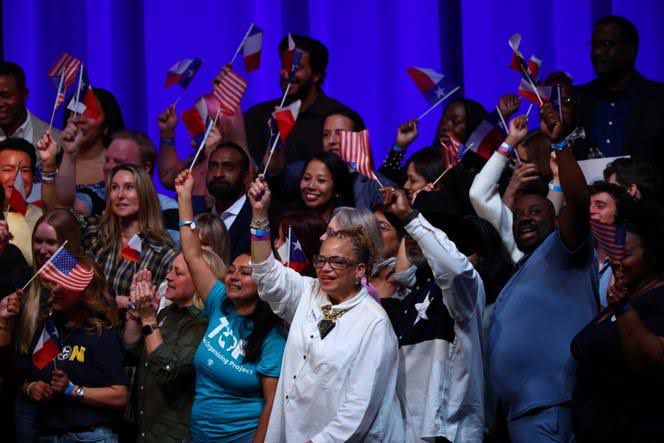
The Democratic Party’s sweeping victory in the 2026 US midterm elections has created new opportunities to reshape America’s international economic relationships, particularly with traditional allies and major trading partners.
With Democrats gaining control of both chambers of Congress, attention is turning towards how the party could use its legislative influence to promote diplomatic cooperation, restore international trade confidence and attract foreign investment.
The development comes amid growing global concerns about President Donald Trump’s tariff policies, trade disputes and the economic consequences of strained relationships with several American allies.
Although Trump retains significant control over foreign policy, the Democratic-controlled Congress can influence international relations through funding decisions, trade legislation, diplomatic oversight and Senate confirmation powers.
RESTORING RELATIONS WITH CANADA AND EUROPE
One of the Democrats’ immediate priorities could be improving economic relations with Canada, America’s major trading partner.
The controversy surrounding Trump’s tariffs has affected businesses operating across the US-Canada border, particularly in automobile manufacturing, energy and agriculture.
Democrats could pursue legislation challenging these tariffs while encouraging renewed negotiations with Ottawa.
Relations with European allies could also receive attention. Stronger cooperation with the European Union and NATO countries could encourage investment, expand technology partnerships and improve access to international markets.
A recent analysis by the European Union Institute for Security Studies identified cooperation with the incoming Democratic Congress as an important opportunity for rebuilding transatlantic relations.
EXPANDING TRADE WITH ASIAN ECONOMIES
Asia represents another significant opportunity for American economic expansion.
Countries such as Japan, South Korea and India offer opportunities for cooperation in automobile manufacturing, electronics, pharmaceuticals, artificial intelligence and renewable energy.
Democrats could encourage trade arrangements that improve market access, protect American businesses and strengthen supply-chain security.
Improved economic cooperation could also help American companies diversify their manufacturing networks and reduce excessive dependence on individual foreign suppliers.
However, relations with China will require careful management because of continuing disagreements over technology, intellectual property, industrial competition and national security.
ATTRACTING FOREIGN INVESTMENT
Stronger international relations could encourage foreign companies to invest in American industries.
Democrats could support policies that provide greater regulatory predictability, strengthen diplomatic relationships and encourage international businesses to establish manufacturing facilities in the United States.
Foreign investment in technology, infrastructure, energy and manufacturing could create employment opportunities, increase industrial capacity and generate tax revenue.
The objective would be to make America an attractive destination for international investors without abandoning protections for domestic businesses and workers.
ENERGY AND INTERNATIONAL COOPERATION
Energy security could become another important component of the Democratic economic agenda.
Stronger relationships with Canada, European energy suppliers and other international partners could improve access to reliable energy resources.
Cooperation in renewable energy, electricity infrastructure and advanced energy technology could also create new business opportunities.
With international energy markets affected by geopolitical tensions, diplomatic cooperation could help reduce supply disruptions and improve market stability.
The continuing US-Iran conflict has demonstrated how international instability can affect oil prices, fuel expenses and household affordability.
STRENGTHENING DIPLOMACY THROUGH ECONOMIC PARTNERSHIPS
Democrats could also use their congressional influence to strengthen America’s diplomatic relationships through foreign aid, international development programmes and economic cooperation.
Supporting infrastructure, education, healthcare and technology partnerships in developing economies could create new markets for American companies.
Africa, for example, offers opportunities for American investment in agriculture, telecommunications, healthcare, energy and digital technology.
Stronger partnerships with African economies could expand American commercial opportunities while supporting development and employment across the continent.
THE CHALLENGE: TRUMP STILL CONTROLS FOREIGN POLICY
Despite their congressional victory, Democrats cannot independently determine America’s entire foreign policy.
Trump remains president and retains considerable executive authority over diplomatic negotiations, international agreements and military decisions.
According to the Council on Foreign Relations, Democrats can influence foreign policy through congressional funding, oversight, trade legislation and Senate confirmation powers, but their ability to reverse presidential decisions will remain constrained.
Consequently, meaningful improvements in international relations may require cooperation between Congress and the White House.
The Democratic victory presents an opportunity for the United States to strengthen its international economic relationships and rebuild confidence among important trading partners.
Improved relations with Canada, Europe, Asia and Africa could expand trade, attract foreign investment, strengthen energy security and create opportunities for American businesses.
However, these ambitions will depend on practical diplomatic agreements, predictable trade policies and cooperation across America’s political institutions.
Ultimately, stronger international relationships could become an important instrument for supporting American economic growth, provided diplomatic commitments translate into tangible commercial opportunities, employment and improved living standards.

