
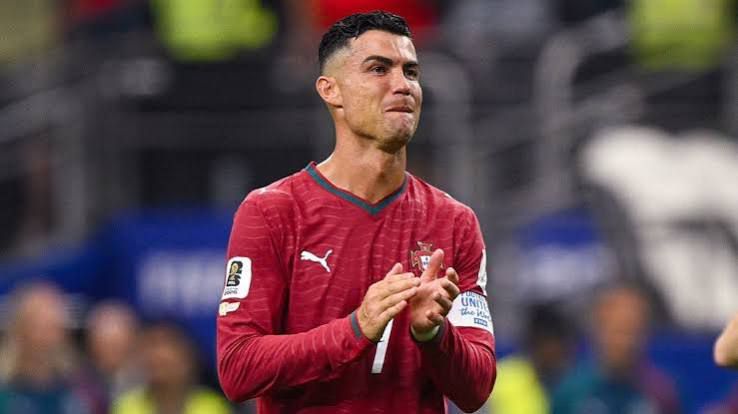
Portugal has officially entered a new chapter in its football history following the retirement of Cristiano Ronaldo from international football on November 5, 2026. After 23 years of representing his country, the 41-year-old forward has brought an extraordinary international career to an end, leaving behind records, trophies and a legacy that will be difficult for any footballer to replicate.
Ronaldo departs as Portugal’s greatest international goalscorer and most-capped player, having recorded 146 goals in 234 appearances. He also captained the national team to its historic UEFA Euro 2016 triumph and two UEFA Nations League titles in 2019 and 2025.
His retirement is more than the departure of an experienced striker. It represents the end of an era in which Portugal’s football identity, international expectations and global recognition were closely associated with one extraordinary individual.
However, the important question now is not whether Portugal can find another Cristiano Ronaldo. It is whether the country can build a team capable of achieving even greater collective success without depending on one superstar.
The answer is yes, but the transition will require careful planning, tactical adjustments, strong leadership and confidence in the next generation.
THE FIRST MAJOR CHALLENGE: REPLACING RONALDO’S GOALS
One of Portugal’s immediate concerns will be finding a reliable source of goals.
Ronaldo’s 146 international goals represent an extraordinary contribution that cannot realistically be replaced by a single player overnight.
For more than two decades, Portugal had a forward capable of changing matches through individual brilliance, aerial ability, positioning, penalties and remarkable performances in important moments.
His departure creates an opportunity for several attacking players to assume greater responsibility.
Among the leading candidates are:
1. Rafael Leão: The winger possesses the pace, strength, dribbling ability and attacking confidence to become one of Portugal’s most influential offensive players. Rather than attempting to imitate Ronaldo, Leão should be encouraged to develop his own identity as a match-winning attacker.
2. Gonçalo Ramos: The striker offers Portugal a more conventional centre-forward option. His movement inside the penalty area, pressing ability and finishing could help the team develop a different attacking approach.
3. João Félix: Technically gifted and creative, Félix could become an important attacking link between midfield and the forward line. His ability to operate behind the striker provides tactical flexibility.
4. Pedro Neto: His pace, direct attacking approach and ability to create opportunities make him another important option in Portugal’s attacking rebuild.
5. Francisco Trincão: His creativity, ball control and ability to operate between the lines could give Portugal another dimension in the final third.
Portugal should avoid making the mistake of searching for another Ronaldo. Instead, the coaching staff must develop an attacking system in which goals are shared among several players.
A team with four or five consistent goalscorers could become more difficult to defend against than a team that depends heavily on one individual.
BRUNO FERNANDES, BERNARDO SILVA AND THE NEW LEADERSHIP STRUCTURE
Ronaldo’s retirement also creates a leadership vacuum.
For years, he was the captain, dressing-room reference point and most recognisable personality in the Portuguese national team.
His departure means Portugal must establish a new leadership structure capable of maintaining discipline, ambition and unity.
Bruno Fernandes is one of the strongest candidates to become the team’s leading voice.
The Manchester United midfielder possesses international experience, competitive determination and the ability to influence matches through creativity and leadership.
Bernardo Silva is another important figure. His technical intelligence, experience at the highest level and understanding of international football could help maintain stability during the transition.
Other experienced players, including Rúben Dias, João Cancelo and Rúben Neves, will also have important responsibilities.
Interestingly, following Ronaldo’s retirement, manager Jorge Jesus identified Bernardo Silva, Rúben Dias, João Cancelo, Rúben Neves and Bruno Fernandes as the players next in Portugal’s captaincy hierarchy, based on international appearances.
This provides an opportunity to establish collective leadership rather than transferring the entire responsibility to one individual.
JORGE JESUS HAS ALREADY BEGUN THE REBUILDING PROCESS
One of the most significant developments following Ronaldo’s retirement is the immediate response from Portugal’s new manager, Jorge Jesus.
According to reports published on November 6, 2026, Jesus announced his first Portugal squad since Ronaldo’s international retirement, introducing seven new names ahead of the country’s Nations League matches against Denmark and Wales.
The new selections include Alberto Costa, António Silva, Mateus Fernandes, Carlos Forbs, Geovany Quenda, Rodrigo Mora and Gustavo Varela.
The inclusion of younger players demonstrates that Portugal is beginning to prepare for a future built around a new generation.
Jesus has also indicated his intention to familiarise younger footballers with his tactical ideas rather than waiting until major international tournaments before introducing them.
This is an important decision.
Portugal cannot afford to wait until the next European Championship or World Cup before discovering which young players are capable of handling international football.
The rebuilding process must begin immediately.
PORTUGAL ALREADY HAS THE TALENT TO MOVE FORWARD
One advantage Portugal possesses is the quality of its football development system.
Unlike countries that struggle to produce technically gifted players, Portugal continues to develop footballers capable of competing at the highest levels of European football.
The midfield department, in particular, remains one of the team’s greatest strengths.
Players such as Vitinha, João Neves, Bruno Fernandes and Bernardo Silva provide a combination of creativity, intelligence, technical ability and tactical discipline.
Defensively, Rúben Dias remains an important figure, while Portugal has several other options capable of competing for starting positions.
The emergence of young players such as Geovany Quenda and Rodrigo Mora also provides encouraging possibilities.
The challenge is not necessarily a shortage of talent. It is ensuring that the available talent develops into a balanced and competitive national team.
Portugal must build a side where midfielders contribute to goals, defenders participate confidently in building attacks and forwards take collective responsibility for scoring.
TACTICAL CHANGES: PORTUGAL MUST DEVELOP A NEW IDENTITY
For several years, Portugal’s attacking structure frequently involved finding ways to maximise Ronaldo’s influence.
His positioning, movement and finishing shaped several attacking decisions.
Without him, Jorge Jesus has an opportunity to introduce a more flexible system.
One possible approach is a 4-3-3 formation featuring a mobile centre-forward supported by two dynamic wingers.
Rafael Leão and Pedro Neto could provide width and attacking penetration, while Gonçalo Ramos could operate as the central striker.
Behind them, Bruno Fernandes and Bernardo Silva could contribute creativity, while Vitinha or João Neves provides control and progression from midfield.
Another possibility is a 4-2-3-1 formation, with João Félix or Bruno Fernandes operating behind the striker.
The most important consideration is flexibility.
Portugal must be capable of changing its attacking approach depending on the opposition rather than relying on one player to produce a moment of brilliance.
The team should also improve its pressing, counter-attacking speed and movement inside the penalty area.
A more collective attacking approach could make Portugal less predictable.
THE MENTAL AND EMOTIONAL CHALLENGE
Replacing Ronaldo’s contribution is not only a footballing challenge. It is also a psychological one.
For younger Portuguese players, Ronaldo has been more than a teammate. He has been an inspiration and an example of what dedication, discipline and ambition can achieve.
His presence provided the team with a psychological advantage in difficult matches.
Opponents knew that even when Portugal struggled, Ronaldo could produce something extraordinary.
The next generation must now develop the confidence to take responsibility without constantly looking towards the legacy of their former captain.
Jorge Jesus has an important role in this process.
He must create an environment where young players are encouraged to express themselves, take risks and accept responsibility.
The message should be simple: Portugal’s future does not depend on finding another Cristiano Ronaldo. It depends on developing eleven players who can work together to achieve something extraordinary.
WHAT ARE PORTUGUESE FANS SAYING?
Ronaldo’s retirement has generated different reactions among Portuguese football supporters.
While there is widespread recognition of his contribution to the country, opinions about his continued involvement in the national team had already become divided before his announcement.
A survey published by CNN Portugal in October, conducted by polling agency Pitagórica, revealed that 46 per cent of respondents believed it was time for Ronaldo to retire internationally, while 41 per cent wanted him to continue.
The survey also revealed that 51 per cent believed his participation should depend on his performances and the coach’s decisions rather than his reputation.
Interestingly, 94 per cent acknowledged that Ronaldo had a positive impact on the Portuguese national team throughout his career.
These findings demonstrate an important distinction: Portuguese supporters can appreciate Ronaldo’s extraordinary achievements while accepting that the national team must eventually move forward.
There are several perspectives emerging from the debate.
The Ronaldo loyalists: Some supporters believe Portugal will struggle without the forward’s experience, mentality and ability to deliver in decisive moments. They argue that his influence extended beyond scoring goals.
The younger-generation supporters: Others believe his retirement provides an opportunity for younger players to establish themselves without the pressure of playing in the shadow of one of football’s biggest personalities.
The tactical football supporters: Another group believes Portugal could become more dangerous collectively because attacking responsibilities will be distributed among several players.
The traditional football supporters: For many, the greatest concern is not necessarily Portugal’s ability to find goals but whether the next generation can reproduce the winning mentality that Ronaldo helped establish.
Ultimately, the majority of these perspectives point towards one reality: Ronaldo deserves recognition, but Portugal must not allow nostalgia to prevent progress.
FIVE THINGS PORTUGAL MUST DO TO AVOID A POST-RONALDO DECLINE
To successfully navigate this transition, Portugal should concentrate on five major priorities.
1. Give younger players genuine opportunities.
Young footballers must receive meaningful playing time in competitive international matches. Selection should be based on performance, tactical suitability and consistency rather than reputation.
2. Develop multiple goalscoring options.
Portugal should avoid creating another situation where the team’s attacking success depends excessively on one player. Goals must come from the striker, wingers and midfielders.
3. Establish strong leadership.
Bruno Fernandes, Bernardo Silva and Rúben Dias must help establish a dressing-room culture that maintains Ronaldo’s competitive standards.
4. Maintain tactical flexibility.
Jorge Jesus must develop a system that allows Portugal to compete against different styles of football, particularly against defensively organised teams.
5. Build towards the 2030 World Cup.
Portugal has an important opportunity ahead. The country will co-host the 2030 FIFA World Cup alongside Spain and Morocco.
That tournament could become a defining moment for the post-Ronaldo generation.
Rather than waiting until 2030, Portugal should use the coming international competitions to develop a settled team capable of challenging for major honours.
CAN PORTUGAL WIN ANOTHER MAJOR TROPHY WITHOUT RONALDO?
There is no guarantee that Portugal will immediately reproduce the success associated with the Ronaldo era.
Winning international tournaments requires more than individual talent. It demands consistency, tactical organisation, strong mentality and the ability to perform under pressure.
However, Portugal has several reasons to remain optimistic.
The country has experienced midfielders, talented attacking players, a strong defensive foundation and a new generation seeking opportunities.
Its Euro 2016 victory also demonstrated that Portugal can win major international competitions through collective organisation and resilience.
The next challenge is translating its individual quality into consistent team performances.
If Jorge Jesus successfully combines the experience of established internationals with the energy of emerging talents, Portugal could develop into an even more balanced side.
Ronaldo’s absence will undoubtedly be felt, especially in matches where individual brilliance makes the difference.
But football history has repeatedly demonstrated that successful national teams must eventually move beyond their greatest players.
CONCLUSION: THE END OF AN ERA, THE BEGINNING OF ANOTHER
Cristiano Ronaldo’s international retirement marks the end of one of the most remarkable chapters in Portuguese football history.
His 146 goals, 234 appearances, leadership and contribution to Portugal’s international success will remain part of the country’s sporting identity.
However, the future of Portuguese football cannot be built entirely around memories of the past.
The responsibility now belongs to Bruno Fernandes, Bernardo Silva, Rafael Leão, Vitinha, João Neves, Gonçalo Ramos and the emerging generation of Portuguese footballers.
Jorge Jesus must also demonstrate that he can successfully manage this transition and build a team capable of competing for the biggest trophies.
Portugal does not need another Cristiano Ronaldo to remain great.
It needs a generation of players who understand the importance of teamwork, responsibility, discipline and ambition.
The ultimate measure of Ronaldo’s legacy may not simply be the records he leaves behind, but whether the players who follow him can take Portugal to even greater heights.
The No. 7 shirt may have a new owner, but the responsibility of carrying Portugal’s football ambitions forward belongs to an entire generation.

