
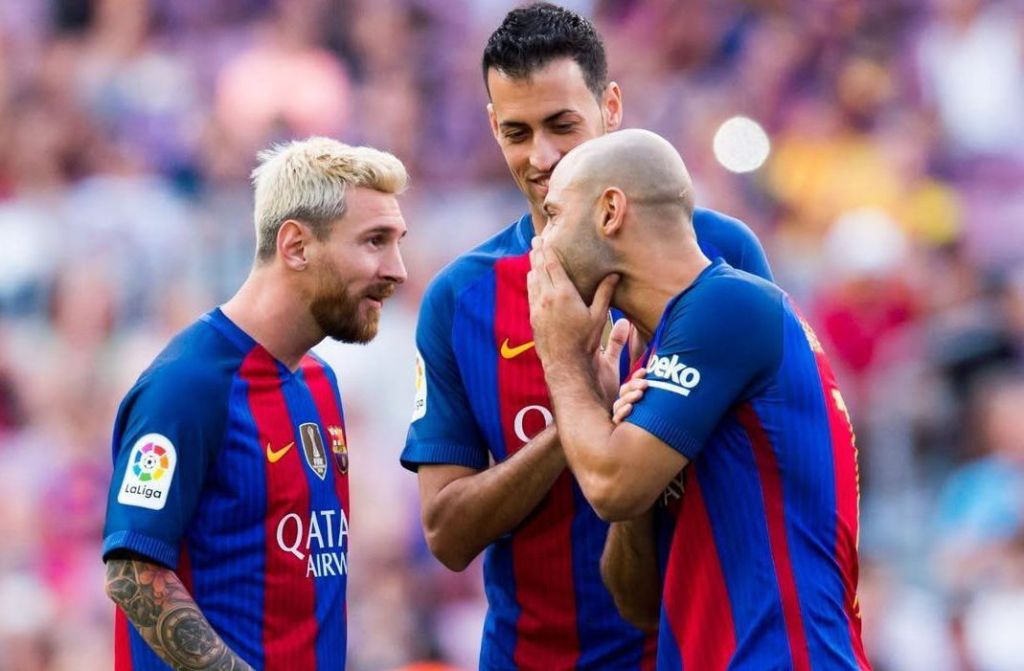
Few debates divide Barcelona fans like the comparison between Javier Mascherano and Sergio Busquets. Both were central figures in one of the greatest teams in football history. Both were trusted by Pep Guardiola. Yet, when Guardiola had to choose one pivot to build his system around, he consistently stuck with Sergio Busquets.
So who was actually better?
And more importantly, why did Pep Guardiola make Busquets untouchable in that role?
To answer that, we need to look beyond tackles and passion — and dive into football intelligence, positional play, and Pep’s philosophy.
Profile Overview: Two Different Midfield Warriors
Javier Mascherano: The Relentless Fighter
Mascherano arrived at Barcelona in 2010 with a reputation as a world-class defensive midfielder. He was aggressive, intense, and fearless.
Key traits:
Exceptional ball-winning ability
High defensive intensity
Leadership and warrior mentality
Strong in duels and pressing
Mascherano played with heart and urgency. He covered ground relentlessly and never hid in big moments. However, his game was more reactive than positional, and over time, his best role at Barça shifted to centre-back, where his defensive instincts shone brightest.
Sergio Busquets: The Silent Genius
Busquets, on the other hand, was a product of La Masia and Pep Guardiola’s vision. He didn’t tackle loudly. He didn’t sprint aggressively. Yet he controlled games without fans even noticing.
Key traits:
Elite positional awareness
One-touch passing and tempo control
Tactical intelligence
Ability to read the game seconds ahead
Busquets wasn’t flashy — he was foundational. He made everything around him work better.
Why Pep Guardiola Chose Sergio Busquets
1. Positional Intelligence Over Physicality
Pep Guardiola values space management more than raw aggression.
Busquets mastered:
Cutting passing lanes without tackling
Being in the right position before danger appeared
Shielding the defence simply by standing correctly
Mascherano often won the ball after danger developed.
Busquets prevented danger before it even existed.
For Pep, that difference was decisive.
2. The Pivot Role in Pep’s System
In Guardiola’s system, the defensive midfielder is not just a destroyer — he is the brain of the team.
Busquets:
Dropped between centre-backs during build-up
Created numerical superiority in midfield
Allowed Xavi and Iniesta to play higher
Mascherano was excellent defensively, but he didn’t offer the same fluidity and calm in possession that Pep’s positional play demanded.
3. Press Resistance and Decision-Making
One of Busquets’ biggest advantages was his ability to:
Receive the ball under pressure
Turn away from opponents with minimal touches
Make the correct decision almost every time
Pep once said Busquets was “one of the most intelligent players I’ve ever coached.”
Mascherano thrived in chaos.
Busquets thrived in control.
Pep always chooses control.
4. Trust and Tactical Discipline
Guardiola demands absolute obedience to tactical principles.
Busquets:
Stayed disciplined
Rarely left his zone unnecessarily
Understood Pep’s system intuitively
Mascherano’s natural instinct was to chase, press, and fight — qualities Pep admired, but not always what the pivot role required.
Who Was Actually Better?
The honest answer is: it depends on the role.
If you need:
Aggression
Defensive intensity
Leadership in battle
Mascherano is your man.
If you need:
Game control
Tactical intelligence
Positional perfection
Busquets is irreplaceable.
For Pep Guardiola’s Barcelona, Busquets was simply more suitable.
Legacy Comparison
Mascherano became a cult hero, a leader, and one of the best emergency centre-backs in football history.
Busquets became the gold standard for the modern defensive midfielder, influencing an entire generation.
Pep didn’t choose Busquets because Mascherano wasn’t good enough.
He chose Busquets because no one else in the world could play that role like him.
Conclusion
Javier Mascherano was a warrior.
Sergio Busquets was a chess master.
Pep Guardiola’s football is chess — not boxing.
And that is why Busquets wasn’t just preferred…
He was essential.

