
Washington, United States:
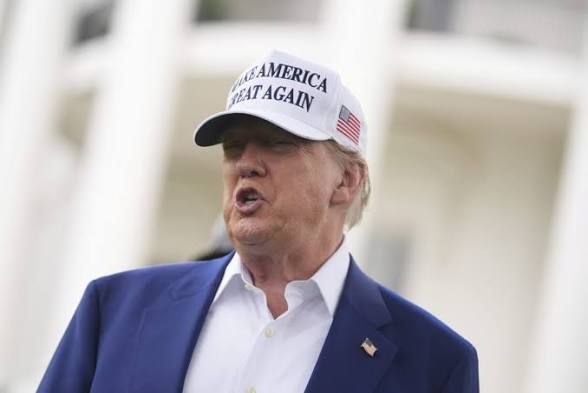
United States President Donald Trump has signalled a determined response to anticipated congressional investigations by Democratic lawmakers following the party’s victory in the November 3 midterm elections, placing the relationship between the White House and the incoming Democratic-controlled Congress at the centre of American political discussions.
In a significant development on Saturday, November 7, Trump announced that he had directed the Department of Justice (DOJ) to examine what he described as threatening actions by Democratic political leaders against members of his administration.
In a statement published on his Truth Social platform, the president accused Democrats of threatening several government officials, including Attorney General Todd Blanche, with impeachment and other forms of punishment.
Trump characterised the alleged conduct as a criminal matter and called for an immediate investigation, although he did not provide evidence establishing that the Democrats had committed a criminal offence.
The announcement comes as Democrats prepare to assume control of Congress in January 2027, opening a new chapter in the relationship between the legislative and executive branches of the American government.
Democrats Prepare for Congressional Investigations
Following their midterm victory, Democratic leaders have outlined plans to exercise congressional oversight over the Trump administration, with investigations expected to cover several areas of government activity.
Among the issues identified are the financial dealings of the Trump family, corporate relationships with the administration, immigration enforcement activities and the handling of the Jeffrey Epstein investigation.
Representative Robert Garcia of California, who is expected to lead the House Oversight Committee, has emerged as one of the prominent Democratic figures preparing to oversee the proposed investigations.
His message to individuals who could become subjects of congressional inquiries was particularly direct, as he encouraged them to seek legal representation.
Senate Democratic leader Chuck Schumer has also emphasised his party’s intention to use its congressional authority to examine executive branch activities and demand accountability.
These developments reflect the incoming majority’s intention to make congressional oversight a significant part of its legislative responsibilities.
Trump Raises Concerns Over Impeachment Threats
Trump’s response has particularly focused on comments by Democratic lawmakers concerning possible impeachment proceedings against members of his administration.
He specifically mentioned Democratic Senator Elissa Slotkin of Michigan, whose previous remarks called for congressional investigations into individuals who had supported or implemented the president’s policies.
Slotkin explained that accountability for unlawful conduct and the use of public resources should remain central to congressional oversight.
She also argued that individuals considering positions within the administration should understand that their professional decisions could attract scrutiny if they participate in unlawful activities.
The senator subsequently defended her position following criticism from Republican lawmakers.
Trump’s latest announcement has therefore brought renewed attention to the boundaries between congressional investigative authority, political accountability and the responsibilities of the Justice Department.
The Justice Department and Institutional Responsibilities
The Department of Justice now occupies an important position in the developing political situation following Trump’s directive.
The president has asked the department to examine the conduct he attributes to Democratic leaders, while the proposed congressional investigations will involve separate oversight responsibilities exercised by lawmakers.
The distinction between these institutions is particularly important within the American constitutional system.
Congress possesses investigative powers that allow its committees to request government documents, summon witnesses and conduct public hearings.
Meanwhile, the Justice Department is responsible for administering federal law and determining whether available evidence supports criminal investigations or prosecutions.
The department’s response to the president’s latest directive will therefore attract considerable attention as the political transition approaches.
A New Relationship Between the White House and Congress
The Democratic victory has significantly changed the political environment surrounding Trump’s second administration.
With Democrats preparing to control both chambers of Congress, the White House will have to navigate a legislative environment in which opposition lawmakers will exercise greater influence over committee investigations, congressional hearings and legislative priorities.
Trump has indicated that he remains prepared to work with Democrats where possible, while maintaining that he will use his presidential veto authority when disagreements arise over legislation.
This creates an important period for negotiations involving government funding, national security, immigration, economic policy and international relations.
The coming months will provide opportunities for both parties to establish their approaches to governing under the new congressional arrangement.
Political Analysis: America’s Next Constitutional and Political Test
Trump’s decision to involve the Justice Department in examining Democratic leaders’ conduct introduces another important dimension to the political consequences of the midterm elections.
At the centre of the situation is the relationship between presidential authority and Congress’s constitutional responsibility to oversee the executive branch.
For Democrats, the incoming congressional majority provides an opportunity to investigate government operations, examine administrative decisions and seek explanations from senior officials.
For the Trump administration, responding to these investigations while maintaining its policy priorities will become an important part of governing during the final two years of the president’s current term.
The Justice Department’s handling of the president’s request will also be closely watched because of the importance of maintaining clear institutional responsibilities and established legal procedures.
Meanwhile, the political positions of influential figures, including Vice President JD Vance, Attorney General Todd Blanche, House Oversight Committee leadership and Senate Democrats, will help shape the direction of the unfolding developments.
The situation also carries implications for the Republican Party’s future leadership discussions as attention gradually shifts towards the 2028 presidential election.
Ultimately, the coming congressional session will provide a significant test of cooperation, constitutional oversight and political accountability in Washington.
As Democrats prepare to take control of Congress, Trump’s response demonstrates that the next phase of American politics will involve important discussions about executive authority, legislative independence and the future relationship between the White House and Capitol Hill.

