
Jerusalem, Israel:
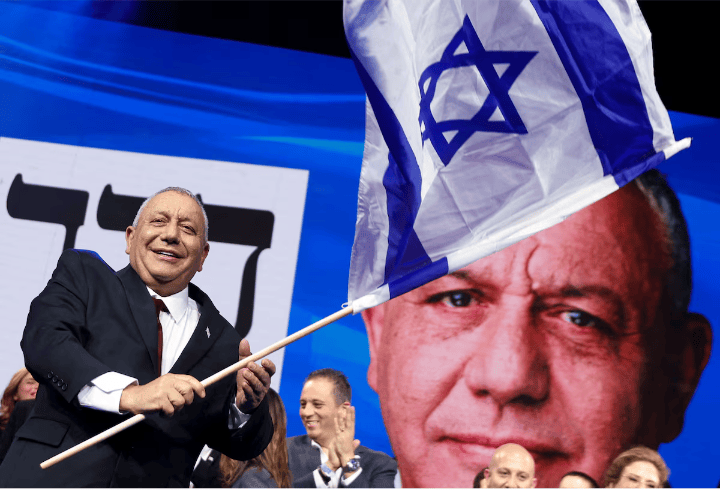
Israel has entered a significant new chapter in its political landscape after President Isaac Herzog selected former military chief Gadi Eisenkot to attempt to form a new government, placing Prime Minister Benjamin Netanyahu’s political future at the centre of an intense coalition-building process.
The decision, announced on Saturday, November 7, follows the October 27 general election, which produced a divided parliament without giving either major political bloc the 61 seats required to establish a governing majority.
Eisenkot, Netanyahu’s leading political rival, received the largest number of recommendations from parliamentary factions during consultations with the president, giving him the first opportunity to negotiate a coalition.
The development represents an important moment for Israel’s political establishment as competing parties begin negotiations over the country’s next government, national security priorities and future policy direction.
Eisenkot Gets First Opportunity to Form Government
President Herzog’s decision followed consultations with representatives of Israel’s political parties.
According to the presidential office, factions representing 67 members of the 120-seat Knesset recommended Eisenkot for the mandate, while 46 lawmakers supported Netanyahu. Seven lawmakers did not recommend either candidate.
Eisenkot leads the Yashar party, which emerged as the second-largest political party with 21 parliamentary seats.
His broader four-party coalition secured 48 seats, leaving it short of the 61 required for a parliamentary majority.
The former military chief now has 28 days to negotiate an agreement with other political groups, with a possible additional 14-day extension.
In his initial reaction, Eisenkot called for the formation of a national emergency government and expressed his commitment to the responsibility ahead.
Netanyahu’s Coalition Faces a New Political Reality
Netanyahu, Israel’s longest-serving prime minister, remains an influential figure in the country’s political establishment.
His Likud party secured 27 seats, making it the largest individual party in parliament. However, the wider religious-nationalist coalition supporting him obtained only 53 seats, leaving it eight seats short of a governing majority.
The election result has therefore created a complicated political situation for Netanyahu, whose continued leadership depends on the parliamentary negotiations and possible coalition arrangements.
His political experience and established relationships within Israel’s political system remain important factors as the country considers its next government.
Meanwhile, the opposition’s ability to bring together different political interests will be central to the coalition negotiations.
Arab Parties Become Important to Coalition Negotiations
One of the most significant developments from the October election was the performance of parties representing Israel’s Arab minority.
Two Arab-led political parties secured a combined 19 seats, representing an unprecedented parliamentary presence for the groups.
Their representatives recommended Eisenkot to President Herzog, contributing to his 67 parliamentary endorsements.
However, Eisenkot has previously expressed reservations about forming a government directly with Arab-led parties.
This creates an important political consideration because their parliamentary support could provide the numbers needed to establish an alternative government.
Potential arrangements include a minority government receiving external parliamentary support, negotiations with ultra-Orthodox parties or an agreement involving different political groups.
Each possibility presents different policy considerations, particularly regarding national security, religious affairs, government spending and relations with Palestinian communities.
Israel’s Security and Foreign Policy Priorities
The leadership negotiations are taking place against the background of continuing regional security challenges and international attention surrounding Israel’s military and diplomatic policies.
Eisenkot brings substantial military experience to the political conversation, having served as Israel Defense Forces chief of staff between 2015 and 2019.
He also participated as an observer in Netanyahu’s wartime cabinet following the October 7, 2023, Hamas attacks.
During his political career, Eisenkot has expressed criticism of Netanyahu’s management of the Gaza campaign and opposed the influence of certain far-right figures within the outgoing coalition.
His approach to national security, relations with neighbouring countries and international diplomatic partnerships could therefore become important subjects during negotiations.
The composition of the next government will also influence discussions about Israel’s relationship with the United States, European countries and regional partners.
What Happens If Eisenkot Fails?
Israel’s coalition-building process provides additional constitutional options if the first candidate cannot establish a government.
If Eisenkot fails within the allotted period, another candidate may receive an opportunity to negotiate a parliamentary majority.
Further parliamentary procedures could follow, potentially leading to another election if no candidate succeeds in forming a government.
During this period, Netanyahu would remain caretaker prime minister until a new government is established.
Consequently, the coming weeks will be particularly important as political parties examine possible agreements and determine which policy compromises they can accept.
Political Analysis: A Defining Moment for Israel’s Political Leadership
The selection of Gadi Eisenkot represents more than a routine government-formation exercise. It highlights the changing balance of political influence within Israel following an election that produced competing parliamentary blocs without a clear majority.
For Eisenkot, the immediate task is translating his parliamentary endorsements into a functioning coalition capable of securing confidence in the Knesset.
His military background, political relationships and stated positions on national security provide important elements of his leadership profile. However, coalition negotiations will require engagement with parties holding different ideological and policy priorities.
For Netanyahu, the situation presents an important test of his longstanding political influence and his ability to maintain a governing coalition.
Despite losing his bloc’s parliamentary majority, his Likud party remains the largest individual party in the Knesset, ensuring that he continues to play a significant role in the country’s political discussions.
The 19 seats secured by Arab-led parties have also become a major consideration in determining the possible structure of the next government.
Ultimately, the outcome will depend on negotiations, parliamentary agreements and the ability of political leaders to reconcile competing interests.
As Israel moves into this new political phase, attention will remain firmly on Eisenkot’s coalition-building efforts and Netanyahu’s next steps.
The coming weeks could shape Israel’s leadership, domestic political direction and approach to regional diplomacy for the next parliamentary period.

