
Washington, United States | November 8, 2026
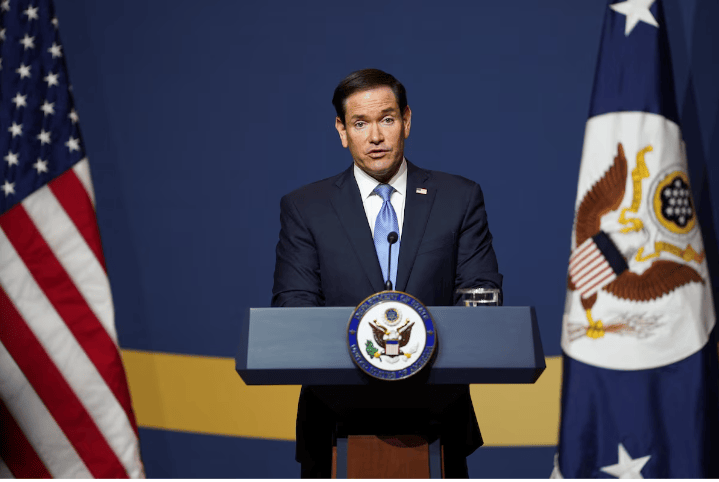
United States Secretary of State Marco Rubio is moving to strengthen administrative control and accountability within the State Department, introducing a stricter leadership approach that places professional responsibility, ethical conduct and policy coordination at the centre of American diplomatic operations.
According to an exclusive Reuters report published on November 7, Rubio recently addressed senior State Department officials, instructing them to remain within their designated responsibilities, avoid conflicts of interest and ensure that major policy decisions receive appropriate approval from departmental leadership.
The meeting, which took place before the Republican Party’s November 3 midterm electoral losses, reportedly involved several officials among the department’s approximately two dozen assistant secretaries.
Rubio emphasised that unethical conduct would attract dismissal regardless of an official’s political connections. He also maintained that significant decisions should receive approval from either his office or Deputy Secretary of State Christopher Landau.
The directive reflects an effort to establish a more coordinated administrative structure within one of America’s most influential government institutions.
A New Direction for State Department Leadership
Rubio’s approach places greater emphasis on institutional discipline, clearly defined responsibilities and centralised decision-making.
The Secretary of State reportedly expressed concerns about officials independently pursuing policy initiatives without sufficient coordination with senior leadership.
Under the proposed management approach, departmental officials are expected to operate within their respective areas of responsibility while maintaining communication with the secretary’s office.
His administration of the department also includes closer supervision of overseas travel by political appointees, with Rubio’s office reportedly taking responsibility for approving such trips.
These measures highlight his preference for a structured management system in which diplomatic activities, administrative decisions and policy implementation remain aligned with the department’s leadership.
Personnel Changes and Institutional Accountability
The leadership changes have also coincided with notable personnel developments within the State Department.
One significant departure involved Jeremy Lewin, the department’s policy chief, who left his position shortly after Rubio’s meeting with senior officials.
Three people familiar with the circumstances told Reuters that concerns about working beyond assigned responsibilities and insufficient coordination contributed to his departure.
However, the sources did not associate his exit with ethical misconduct.
Lewin subsequently maintained that his resignation had been planned several weeks earlier and was connected to his intention to return to the private sector.
Another prominent development involved Kimberly Guilfoyle, who resigned as United States ambassador to Greece in October following media reports concerning alleged exchanges of access to Trump administration officials for money, gifts and favours.
Guilfoyle rejected the allegations, describing the reports as false and indicating that she would defend her reputation.
Against this background, Rubio has reinforced the importance of ethical standards and professional conduct throughout the diplomatic service.
The Trump Administration and Republican Political Realignment
Rubio’s administrative reforms are unfolding during an important period for the Republican Party.
Following the November 3 midterm elections, Democrats secured control of Congress, creating a new political environment for the Trump administration.
Several prominent Republican figures have subsequently begun communicating their individual policy priorities and perspectives on the party’s future.
Vice President JD Vance has increasingly highlighted his own political philosophy, while other Republican leaders are examining the implications of the electoral outcome for their future political strategies.
Rubio’s emphasis on institutional management and professional accountability adds another dimension to these discussions.
His position as America’s chief diplomat gives him considerable influence over foreign policy, international partnerships and the country’s diplomatic relationships.
Consequently, the way he manages the State Department could become an important part of his broader political identity.
The 2028 Presidential Question
Marco Rubio’s political future has attracted renewed attention as conversations about the 2028 presidential election begin gaining momentum.
Although he has played down reports suggesting that he is considering a presidential campaign, he has not publicly ruled out the possibility.
His current responsibilities provide an opportunity to establish a record in international diplomacy, government administration and national leadership.
If he eventually enters the presidential race, his management of the State Department, approach to international relations and commitment to institutional accountability could become important subjects of public discussion.
His relationship with President Donald Trump and other influential Republican figures will also remain relevant to the evolving political conversation.
Political Analysis: Rubio’s Leadership Strategy and the Future of American Diplomacy
Rubio’s latest directives reveal an important dimension of his leadership philosophy: the relationship between institutional authority, individual responsibility and effective government administration.
The State Department manages America’s diplomatic relationships across the world, making coordination and professional accountability essential to the execution of foreign policy.
By demanding clearer responsibilities and greater oversight of significant decisions, Rubio is seeking to establish a management structure that places departmental leadership at the centre of policy implementation.
The timing is equally significant. With Democrats preparing to assume control of Congress in January 2027, the State Department could face increased congressional scrutiny over its activities and relationships with foreign officials.
This development makes transparency, proper documentation and adherence to established ethical standards particularly important.
For Rubio, the coming months will provide an opportunity to demonstrate how his administrative priorities translate into diplomatic effectiveness and institutional stability.
His approach also places him within the wider conversation about the Republican Party’s next generation of leadership.
As American politics gradually shifts towards the 2028 presidential cycle, Rubio’s decisions at the State Department will remain relevant not only to America’s foreign policy direction but also to discussions about his potential political ambitions.
Ultimately, his current leadership strategy represents an effort to reinforce administrative coordination, strengthen professional accountability and establish a clearly defined direction for American diplomacy during a significant period of political transition.

