
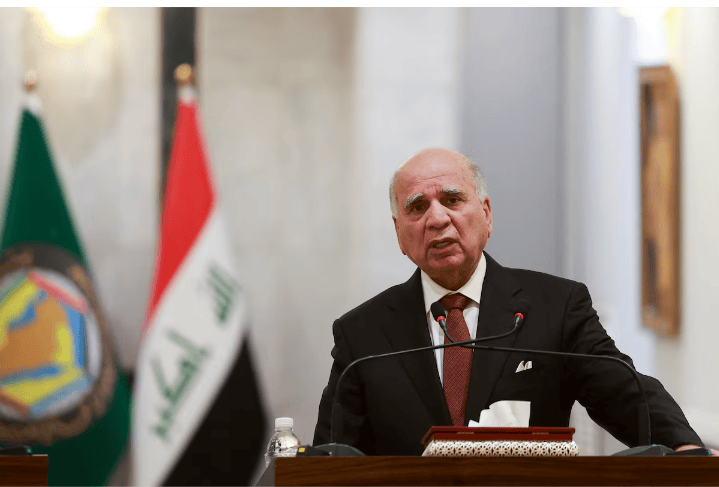
BAGHDAD, IRAQ | NOVEMBER 8, 2026
The United States is increasing economic pressure on Iran by asking Iraq to close nearly all its border crossings with its neighbouring country, leaving only two operational routes, according to Iraqi Foreign Minister Fuad Hussein.
Hussein disclosed the development during an interview with Al Jazeera, revealing that the US Treasury Department had formally requested Baghdad to shut down its border crossings with Iran as part of Washington’s broader strategy to restrict Tehran’s economic activities.
One of the proposed exceptions is located in Iraq’s Kurdistan region, although the foreign minister did not publicly identify the second crossing.
The request places Iraq in a difficult diplomatic position as it attempts to maintain its economic relationship with Iran while responding to growing pressure from its American ally.
IRAQ WARNS OF ECONOMIC CONSEQUENCES
Hussein expressed concerns about the potential economic consequences of closing most of the country’s border crossings with Iran.
According to the foreign minister, Iraq operates numerous official and unofficial crossing points, making a comprehensive closure difficult to implement.
“There are many official and unofficial border crossings with Iran, and closing all of them would be difficult and would affect our economy. The Americans are still demanding the closure of the crossings, and we are currently in discussions with them,” Hussein explained.
His remarks suggest that Baghdad is still negotiating with Washington over the proposal rather than having fully accepted the requested restrictions.
WASHINGTON’S GROWING ECONOMIC PRESSURE ON TEHRAN
The request forms part of the Trump administration’s wider campaign to increase economic pressure on Iran amid the ongoing conflict and diplomatic tensions between Washington and Tehran.
Restricting cross-border trade could make it more difficult for Iran to access important commercial networks, generate revenue and move goods through neighbouring countries.
The United States has increasingly focused on limiting Iran’s financial and commercial connections as negotiations over the conflict continue.
The proposed restrictions on Iraqi border crossings would extend that pressure beyond maritime routes and into Iran’s regional land-trade networks.
THE SHEEB BORDER CROSSING CONTROVERSY
The development also comes after Iraq closed the busy Sheeb border crossing with Iran in October.
Iraqi authorities initially explained that the closure was necessary to review security arrangements and install detection equipment aimed at preventing smuggling.
However, Hussein’s latest comments have brought renewed attention to Washington’s involvement in discussions surrounding Iraq’s border policy.
The situation has also generated political disagreements within Iraq, with some parliamentary groups opposing American pressure and warning against measures that could damage the country’s economic interests.
IRAQ’S DIPLOMATIC BALANCING ACT
Iraq maintains important economic, religious and political connections with Iran while also maintaining a strategic relationship with the United States.
Consequently, Baghdad faces a complicated challenge in balancing its relationship with both countries.
Closing most border crossings could affect traders, businesses, transportation operators and communities that depend on cross-border commerce.
It could also create additional diplomatic complications between Iraq and Iran at a time when regional stability remains uncertain.
THE BIGGER PICTURE: ANOTHER FRONT IN THE US-IRAN ECONOMIC CONFLICT
Washington’s request highlights how the confrontation between the United States and Iran is extending beyond military operations and maritime security into regional trade and economic relationships.
For Iraq, the challenge is protecting its sovereignty and economic interests while managing pressure from two influential neighbouring and international partners.
Whether Baghdad eventually accepts Washington’s proposal or negotiates alternative arrangements remains uncertain.
As tensions continue to shape the Middle East, Iraq is increasingly finding itself at the centre of Washington’s efforts to isolate Tehran economically, raising important questions about regional trade, national sovereignty and the future of Iraqi-Iranian relations.

