
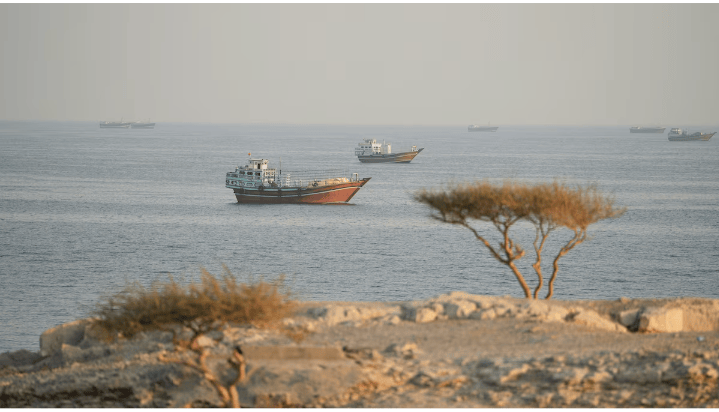
BAGHDAD, IRAQ | NOVEMBER 8, 2026
Iraq has reached an understanding with the United States to resume and facilitate its oil exports through the strategically important Strait of Hormuz, using a designated shipping lane near Oman, as the country reveals that its financial losses from the Iran war and disruptions to oil shipments have reached an estimated $60 billion.
Iraqi Foreign Minister Fuad Hussein disclosed the development during an interview with Al Jazeera, explaining that Baghdad had reached an understanding with Washington to enable Iraqi oil shipments to navigate the critical maritime passage despite continuing regional tensions.
The agreement represents an important development for Iraq, whose economy depends heavily on oil revenues and has faced significant financial pressure since the conflict disrupted commercial shipping across the region.
$60 BILLION IN ECONOMIC LOSSES
Hussein revealed that the economic consequences of the Iran war and interruptions to Iraqi oil exports had accumulated to approximately $60 billion.
The disruption has placed considerable pressure on the country’s oil-dependent economy, affecting government revenue and its ability to maintain financial stability.
Iraq experienced a significant decline in oil shipments during the height of the disruptions. According to Iraqi energy officials, exports fell to approximately 2.65 million barrels per day in September before recovering to around 3.5 million barrels per day in October.
The recovery suggests that efforts to restore export operations are beginning to produce results, although the wider security situation remains uncertain.
STRAIT OF HORMUZ: A CRITICAL LIFELINE FOR IRAQI OIL
The Strait of Hormuz remains one of the world’s most important energy transportation routes, connecting major oil-producing countries in the Persian Gulf with international markets.
For Iraq, maintaining access to the waterway is particularly important because a substantial proportion of its crude oil exports traditionally passes through the strait.
The understanding with Washington involving a shipping lane near Oman could provide an important route for maintaining oil deliveries while reducing some of the complications associated with the ongoing conflict.
However, the arrangement’s long-term effectiveness will depend on maritime security, cooperation among regional governments and the stability of negotiations surrounding the Iran war.
WASHINGTON AND BAGHDAD’S STRATEGIC UNDERSTANDING
The latest development highlights Iraq’s delicate diplomatic position as it attempts to maintain relations with both Washington and Tehran.
While the United States remains an important international partner, Iran is a neighbouring country with significant political, economic and security connections to Iraq.
Baghdad therefore faces the challenge of protecting its national interests without becoming further entangled in the wider confrontation.
Reaching an understanding with Washington over oil shipments demonstrates the importance Iraq places on securing international cooperation to protect its energy industry.
GLOBAL OIL MARKETS WATCH THE DEVELOPMENTS
The announcement could attract considerable attention from international energy markets, particularly as prolonged disruptions around the Strait of Hormuz threaten global oil supplies.
Any improvement in the movement of Iraqi crude oil could contribute to greater stability in international energy deliveries.
Nevertheless, continued attacks on commercial vessels and uncertainty surrounding the wider conflict could undermine shipping confidence and keep transportation costs elevated.
THE BIGGER PICTURE: IRAQ SEEKS ECONOMIC RECOVERY AMID REGIONAL UNCERTAINTY
For Iraq, the reported $60 billion in losses represents a major economic challenge and highlights the vulnerability of oil-dependent economies to geopolitical conflicts.
The understanding with the United States offers Baghdad an opportunity to strengthen its export operations and restore revenue flows, but it does not necessarily eliminate the security risks surrounding the waterway.
As diplomatic efforts continue between Washington and Tehran, Iraq’s ability to protect its oil exports could become an important factor in determining how quickly its economy recovers.
With billions of dollars already lost and global energy markets closely monitoring developments, Iraq is now seeking to turn its latest understanding with Washington into a sustainable lifeline for its most important economic sector.

