
WASHINGTON, D.C. | NOVEMBER 8, 2026
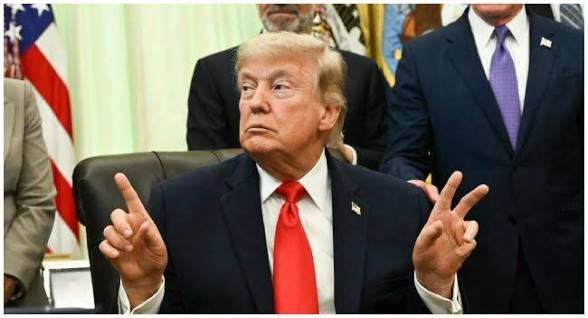
U.S. President Donald Trump has indicated that fresh American military strikes against Iran are highly unlikely if ongoing negotiations produce meaningful progress towards ending the conflict, offering a potential diplomatic opening amid continuing tensions in the Middle East.
Speaking during a telephone interview with CNN on Sunday, Trump suggested that the United States would prefer a negotiated settlement rather than another round of military confrontation, provided Tehran agrees to what he described as a sufficiently strong agreement.
“It depends on whether or not they sign a very strong agreement,” Trump said. “The answer is, highly unlikely it’s going to be necessary.”
His remarks signal a possible shift towards diplomatic engagement as Washington and Tehran face increasing pressure to find a lasting resolution to the conflict.
STRAIT OF HORMUZ REMAINS A MAJOR FLASHPOINT
Despite Trump’s comments, developments around the strategically important Strait of Hormuz continue to raise concerns about regional security and international shipping.
Both the United States and Iran reported incidents involving vessels being hit in or near the waterway, highlighting the fragile security situation despite ongoing diplomatic discussions.
The Strait of Hormuz is one of the world’s most important maritime trade routes, serving as a critical passage for international oil and gas shipments. Any prolonged disruption could have serious consequences for global energy markets, shipping costs and economic stability.
The latest incidents demonstrate that diplomatic progress has yet to translate into complete security on the ground and at sea.
TRUMP’S CONDITIONS FOR A PEACE AGREEMENT
Trump’s reference to a “very strong agreement” suggests that Washington is seeking more than a temporary pause in hostilities.
Although the president did not provide specific details of the proposed agreement during the CNN interview, his comments indicate that the administration wants assurances that would prevent another escalation and establish a more sustainable framework for peace.
For Iran, negotiations could provide an opportunity to reduce military pressure and address the consequences of the conflict. However, reaching an agreement acceptable to both governments could prove challenging, particularly given the deep disagreements surrounding security and regional interests.
GLOBAL MARKETS AND INTERNATIONAL CONCERNS
The situation is attracting international attention because of the potential economic consequences of continued instability around the Strait of Hormuz.
A renewed military confrontation could threaten energy supplies, increase oil price volatility and place additional pressure on countries already dealing with economic uncertainty.
Governments and international markets will therefore be watching closely to determine whether Trump’s latest remarks translate into concrete diplomatic progress.
A DIPLOMATIC OPENING OR A TEMPORARY PAUSE?
Trump’s statement offers a potential opening for negotiations, but the reported maritime incidents underline how fragile the situation remains.
For now, the possibility of further American attacks appears closely tied to the progress of negotiations and the willingness of both sides to accept a mutually enforceable agreement.
The coming days could prove significant in determining whether Washington and Tehran move towards a diplomatic settlement or return to another dangerous phase of military confrontation.
With global shipping, energy security and regional stability at stake, the world is watching to see whether Trump’s latest peace signals can turn a fragile diplomatic opportunity into a lasting agreement.

