
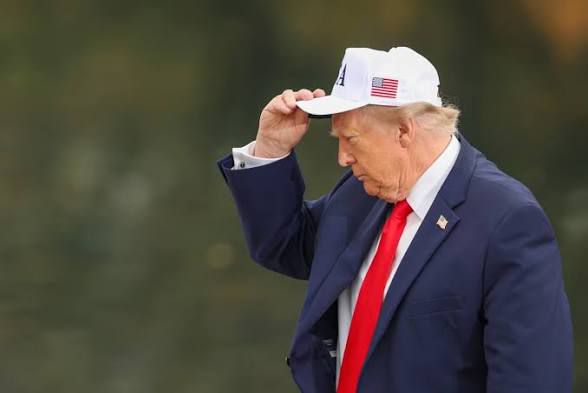
The political landscape in the United States is entering a new phase following the Democratic Party’s sweeping victory in the November 3 midterm elections. Democrats have secured control of both chambers of Congress, creating a significant challenge for President Donald Trump as he enters the final two years of his second presidential term.
The results represent a major shift in Washington’s balance of power. For the first time during Trump’s second administration, the president will have to govern alongside a Congress led by the opposition party.
The election outcome was influenced by voter concerns over rising living costs, inflation, the US-Iran war, government accountability and economic policies. The results have also raised questions about the future direction of Trump’s domestic and international agenda.
With Democrats preparing to assume congressional leadership in January 2027, Trump’s administration is likely to experience greater political scrutiny, legislative resistance and pressure to demonstrate measurable results.
1. A More Challenging Relationship With Congress
One of the most immediate changes will be the relationship between the White House and Congress.
Democrats will control congressional committees, legislative priorities and important oversight processes. This means Trump’s administration will face greater difficulty advancing new policies without negotiating with opposition lawmakers.
Democratic leaders are expected to prioritise affordability, healthcare, economic accountability and investigations into federal government activities.
Trump will retain his presidential authority, including the power to veto legislation, but the new congressional arrangement could produce political deadlock on major issues.
The administration may therefore have to rely more heavily on executive actions, administrative decisions and negotiations with individual lawmakers.
2. Increased Investigations And Congressional Oversight
Investigations are expected to become a defining feature of the next two years.
Democratic lawmakers have indicated their intention to examine the activities of the Trump administration, including government spending, immigration enforcement, federal appointments and possible conflicts of interest.
Congressional committees will have the authority to organise public hearings, request official documents and issue subpoenas as part of their oversight responsibilities.
Senior administration officials could be invited to testify before congressional committees, potentially placing greater pressure on the White House to explain its decisions.
Although investigations do not automatically establish wrongdoing, they could dominate political discussions and influence public confidence in the administration.
3. Stephen Miller’s Appointment Could Strengthen Trump’s Policy Direction
Trump’s appointment of Stephen Miller as White House Chief of Staff following the election defeat could become particularly significant.
Miller has played an influential role in shaping Trump’s immigration and domestic policy agenda. His appointment suggests that the president intends to maintain a strong commitment to his existing policy priorities despite the Democratic victory.
As chief of staff, Miller will have an important role in coordinating presidential priorities, managing White House operations and maintaining communication between the president and government departments.
However, his leadership will operate within a more difficult congressional environment, particularly as Democrats prepare to investigate immigration enforcement and government spending.
The appointment could therefore reinforce policy continuity while increasing the likelihood of political disagreements between the White House and Congress.
4. Economic Policies Could Face Greater Pressure
The economy is likely to become one of the biggest areas of confrontation between Trump and the incoming Democratic Congress.
Democrats have promised to prioritise the cost of living, housing affordability, healthcare expenses, food prices and energy costs.
They may also seek to challenge aspects of Trump’s tariff policies, arguing that import duties can increase costs for American businesses and consumers.
However, the president retains considerable authority over tariffs under existing laws. Congress would face significant legal and political obstacles in attempting to reverse some presidential trade decisions.
The administration could consequently face stronger pressure to demonstrate that its economic policies are improving household finances and creating sustainable employment opportunities.
5. Immigration Policy Will Become A Major Political Battleground
Immigration is expected to remain one of the most controversial policy areas during the remainder of Trump’s presidency.
The administration is likely to continue pursuing its border security and deportation agenda, while Democrats have signalled their intention to investigate immigration enforcement practices.
Congressional hearings could examine detention conditions, deportation procedures, Immigration and Customs Enforcement spending, recruitment and training.
Democrats may also pursue alternative immigration proposals involving legal pathways, employment visas and reforms to the immigration system.
Nevertheless, Trump’s executive authority means that Democratic control of Congress will not automatically end his administration’s immigration policies.
6. Foreign Policy Could Become More Complicated
The election results could also influence America’s international relationships.
Democrats are expected to increase scrutiny of Trump’s approach to the Iran war, relations with European allies, support for Ukraine and military assistance to Israel.
Through control of congressional spending and oversight committees, Democrats will have greater influence over funding decisions and government accountability.
However, the president will continue to exercise considerable authority over foreign policy, diplomacy and military command.
This could produce disagreements over international military operations, foreign aid, trade agreements and America’s relationships with strategic partners.
Foreign governments will also be watching closely to understand whether congressional opposition will affect the consistency of American foreign policy.
7. Cabinet Appointments And Government Leadership Will Face Greater Scrutiny
The Democratic-controlled Senate will have an important role in considering presidential nominations that require Senate confirmation.
This could make it more difficult for Trump to secure approval for certain nominees, particularly where Democrats raise concerns about their qualifications, policy positions or previous public records.
The administration may therefore need to identify candidates capable of attracting bipartisan support.
Existing Cabinet members will also face greater congressional scrutiny through hearings and investigations.
8. Trump Could Rely More Heavily On Executive Orders
With Democrats controlling Congress, passing major legislation could become increasingly difficult.
Trump may consequently rely more frequently on executive orders and existing presidential powers to advance his domestic priorities.
However, executive orders are not unlimited. They must operate within constitutional and statutory boundaries and can be challenged in federal courts.
This means the administration could experience more legal disputes over immigration, trade, federal spending and regulatory decisions.
9. Republicans Will Face Questions About Their Political Future
The election defeat will also create challenges within the Republican Party.
Republican lawmakers will have to decide how closely they should align themselves with Trump’s political agenda while responding to the concerns expressed by voters.
Some may continue supporting the president’s policies, while others could advocate a more moderate approach to economic management, foreign policy and immigration.
The emergence of internal disagreements could affect the party’s ability to maintain a united position in Congress.
The 2028 presidential election will also begin influencing political calculations, particularly among Republican figures seeking to establish their own national profiles.
10. The Final Two Years Could Be Defined By Negotiation And Political Confrontation
The central challenge for Trump’s administration will be finding a way to govern effectively without controlling Congress.
Democrats will have the opportunity to shape congressional investigations, influence spending legislation and block certain presidential nominations.
At the same time, Trump retains the presidency and the constitutional powers attached to the office.
This creates a political environment in which both parties will need to negotiate on issues where cooperation is necessary, including government funding, national security and essential economic legislation.
Some areas may produce bipartisan agreements, while others could remain characterised by prolonged disagreements.
A Different Political Environment For Trump’s Presidency
The Democratic victory has fundamentally changed the political environment surrounding Donald Trump’s administration.
Although Trump remains president and retains significant executive authority, his ability to advance major legislative priorities will face greater restrictions.
The incoming Congress is expected to focus on government accountability, economic affordability, immigration oversight and foreign policy scrutiny.
For Americans, the most important question will be whether this new political arrangement produces meaningful improvements in employment, household income, healthcare, security and the overall cost of living.
The coming two years will test the administration’s ability to negotiate, adapt and deliver results under divided government. Trump’s remaining presidency may therefore be defined not only by the policies he wants to implement, but also by how effectively he manages an increasingly assertive Democratic-controlled Congress.

