
WASHINGTON, D.C. | NOVEMBER 9, 2026
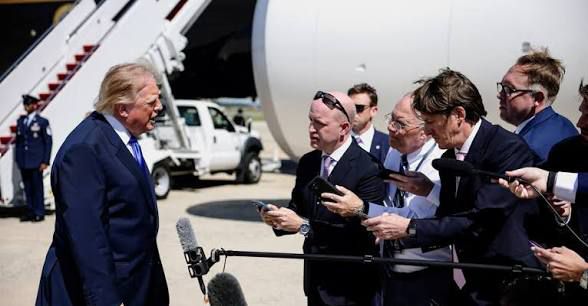
US President Donald Trump is expected to address several critical issues surrounding the eight-month-old Iran war when he meets Qatari Prime Minister Sheikh Mohammed bin Abdulrahman Al-Thani at the White House on Monday.
An important clarification: Trump is scheduled to meet Qatar’s prime minister, not Iran’s foreign minister. Qatar is acting as a mediator between Washington and Tehran, carrying proposals and facilitating indirect negotiations.
The meeting, which is also expected to involve Vice President JD Vance, comes as diplomatic efforts intensify despite significant disagreements between the United States and Iran.
Here are seven major issues expected to feature in the discussions.
1. Ending The War And Securing A Permanent Ceasefire
The most important issue will be establishing a framework to end the conflict that began on February 28, 2026.
Iran wants an end to American military operations and guarantees against renewed attacks.
Washington, meanwhile, wants an agreement that addresses its security concerns and prevents another military confrontation.
The challenge will be developing conditions acceptable to both governments.
2. Reopening The Strait Of Hormuz
The strategic Strait of Hormuz is expected to be another major discussion point.
The waterway is essential to international oil transportation, and disruptions have contributed to concerns about global energy supplies.
Iran wants restrictions on maritime movement addressed as part of a settlement, while Washington wants shipping restored without Iranian restrictions.
A potential agreement could establish arrangements for safe commercial navigation through the waterway.
3. Lifting US Sanctions Against Iran
Iran is demanding the removal of certain American economic sanctions as part of any peace agreement.
Tehran argues that economic restrictions have severely affected its economy and international trade.
Washington, however, has not indicated that it is prepared to remove sanctions without significant concessions from Iran.
The negotiations could explore whether sanctions relief can be introduced gradually in exchange for verifiable Iranian commitments.
4. Ending The US Naval Blockade
Another major disagreement concerns the American naval blockade of Iranian ports.
Tehran wants Washington to lift the blockade before broader negotiations can proceed.
Iran has also demanded the release of frozen financial assets held abroad.
These demands are central to its proposed framework for ending the conflict.
5. Iran’s Nuclear Programme
Iran’s nuclear activities remain among Washington’s most important security concerns.
The United States wants assurances that Tehran will not develop nuclear weapons and is expected to seek greater international monitoring of Iranian nuclear facilities.
The International Atomic Energy Agency (IAEA) could play an important role in verifying any future agreement.
However, Iran has resisted transferring its enriched uranium stockpile abroad, making the nuclear issue one of the most complicated obstacles to negotiations.
6. Release Of Frozen Iranian Funds
The release of Iranian financial assets frozen under international restrictions could also feature in discussions.
Tehran considers access to its frozen funds an important part of any economic settlement.
A reported proposal being discussed through regional mediators involves releasing some frozen Iranian funds as an initial confidence-building measure.
However, the precise financial arrangements have not been officially confirmed by both governments.
7. Ending Hostilities Across The Middle East
The negotiations could also address the wider regional consequences of the conflict.
These include military activities involving Israel, Iran-aligned groups, Lebanon and Yemen.
Washington wants to prevent further attacks against American interests and its regional partners.
Iran, meanwhile, wants an agreement that addresses hostilities across multiple fronts rather than concentrating exclusively on direct American-Iranian military operations.
A comprehensive settlement would therefore need to address regional security concerns alongside the immediate conflict.
WILL TRUMP AND IRAN REACH A PEACE AGREEMENT?
Despite renewed diplomatic activity, expectations of an immediate breakthrough remain uncertain.
Iran has presented a proposal involving a two-day process for implementing initial confidence-building measures, while the Trump administration has questioned several of Tehran’s conditions.
Secretary of State Marco Rubio has described some Iranian demands as unrealistic, demonstrating that significant disagreements remain.
Qatar is therefore seeking additional diplomatic space to bring both sides closer to an acceptable arrangement.
Trump’s meeting with Qatar’s prime minister could become an important moment in efforts to end the Iran war. The biggest questions remain whether Washington will lift its blockade, whether Tehran will reopen the Strait of Hormuz, what concessions Iran will make on its nuclear programme and whether both countries can agree to a lasting ceasefire.

