
Antalya, Turkey | November 9, 2026
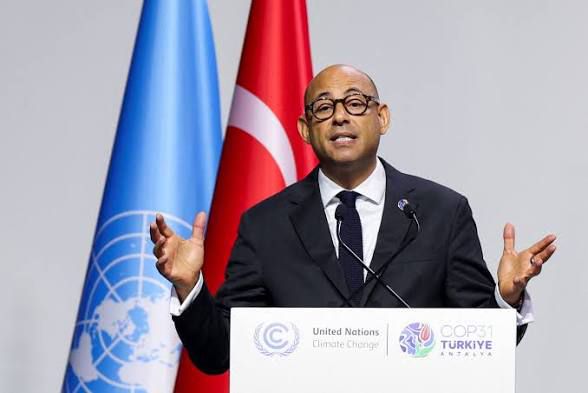
World leaders and climate negotiators have renewed calls for urgent international action against global warming as the 31st United Nations Climate Change Conference (COP31) officially began in Turkey on Monday, November 9, amid rising global temperatures and increasingly destructive climate-related disasters.
At the opening of the two-week international conference, leaders urged governments to accelerate efforts to reduce greenhouse gas emissions, strengthen climate resilience and honour their environmental commitments, warning that continued delays could expose millions more people to devastating environmental consequences.
The appeal comes at a time when climate change is increasingly competing for international attention with other pressing global challenges, including armed conflicts, economic instability, rising inflation, geopolitical tensions and uncertainty surrounding the rapid development of artificial intelligence.
Climate leaders expressed concern that these competing priorities could weaken political commitment to environmental protection, despite growing scientific evidence that the consequences of global warming are becoming increasingly severe.
The conference is expected to bring together government representatives, climate scientists, environmental organisations, development institutions and other stakeholders to discuss practical measures for addressing the climate crisis.
A World Under Increasing Climate Pressure
The opening discussions come against the backdrop of mounting environmental challenges across different regions of the world.
Rising temperatures have contributed to increasingly dangerous heat conditions, while changing rainfall patterns, prolonged droughts, destructive floods, wildfires and rising sea levels continue to threaten communities and economic activities.
Scientists have repeatedly warned that the continued accumulation of greenhouse gases in the atmosphere is intensifying global warming and increasing the risks associated with extreme weather events.
The World Meteorological Organization has identified 2015–2025 as the eleven warmest years in the observational record, highlighting the urgency of reducing emissions and strengthening adaptation measures.
For vulnerable countries, particularly developing nations with limited financial and technological resources, the consequences are especially concerning.
Agricultural production, freshwater availability, public health, infrastructure and food security are increasingly exposed to climate-related risks.
Climate Action Must Not Be Overshadowed By Global Crises
One of the major concerns emerging from the opening of COP31 is the possibility that international political and economic challenges could distract governments from their climate responsibilities.
Armed conflicts, economic uncertainty, inflation and technological disruption are placing additional pressure on national budgets and political decision-making.
However, climate advocates argue that environmental protection should not be treated as a secondary international priority.
Climate-related disasters can worsen poverty, increase food insecurity, displace communities and place additional pressure on already struggling economies.
Furthermore, the consequences of climate change can intensify existing social and economic inequalities, particularly in countries that lack adequate infrastructure and emergency response systems.
The message from climate leaders is that governments cannot afford to postpone environmental action until other international challenges are resolved.
Instead, climate policies must become an integral part of economic planning, national security, agricultural development and international cooperation.
The Demand For Faster Reduction In Greenhouse Gas Emissions
A major focus of international climate discussions remains the reduction of greenhouse gas emissions responsible for global warming.
Coal, petroleum and natural gas continue to power significant portions of the global economy, releasing carbon dioxide and other greenhouse gases when burned.
Climate advocates are therefore calling for faster investment in renewable energy, including solar, wind and other low-carbon technologies.
They are also urging governments to improve energy efficiency, protect forests, reduce industrial emissions and strengthen environmental regulations.
The challenge, however, is balancing the global transition towards cleaner energy with the development needs of countries that still struggle with electricity shortages, poverty and inadequate infrastructure.
Developing nations have consistently argued that climate action must be accompanied by adequate financial support, technology transfer and international cooperation.
Climate Finance Remains A Major Concern
Another important issue confronting the international climate community is the availability of funding for developing countries.
Many vulnerable nations contribute relatively little to historical global greenhouse gas emissions but face some of the most severe consequences of climate change.
These countries require financial resources to construct flood-resistant infrastructure, improve agricultural systems, develop early-warning mechanisms, protect coastal communities and strengthen disaster response.
The question of who should finance these measures has remained a major point of discussion in international climate negotiations.
Developing countries are demanding that wealthier nations fulfil their financial commitments and provide more accessible support for climate adaptation and mitigation.
Without adequate funding, many vulnerable communities may struggle to prepare for environmental changes that are already affecting their livelihoods.
Turkey’s Role In The Global Climate Conversation
Hosting COP31 places Turkey at the centre of international climate diplomacy as governments seek stronger cooperation on environmental protection.
The conference provides an opportunity for participating countries to review existing climate commitments, discuss implementation challenges and explore ways to accelerate progress towards global temperature goals.
Beyond government negotiations, the meeting also provides a platform for scientists, businesses, environmental organisations, young people and civil society groups to contribute to discussions about the planet’s future.
The outcome will be judged not simply by speeches and political declarations but by the practical commitments countries are prepared to implement.
Why COP31 Matters To Africa And Nigeria
For African countries, the discussions at COP31 carry significant economic and environmental implications.
Africa faces serious climate-related challenges, including drought, desertification, flooding, coastal erosion, agricultural disruption and water scarcity.
Although the continent has contributed a relatively small share of historical global greenhouse gas emissions, its vulnerability to climate impacts remains considerable.
Nigeria, in particular, faces environmental pressures ranging from desertification in the north to flooding and coastal erosion in the south.
The Niger Delta also faces interconnected environmental challenges involving oil pollution, gas flaring, mangrove degradation and climate-related flooding.
For Nigeria, meaningful outcomes from COP31 should include stronger international climate financing, improved access to renewable energy technologies, support for climate-resilient agriculture and increased investment in environmental protection.
The country must also strengthen its domestic environmental policies rather than depend entirely on international commitments.
The World Cannot Afford Another Delay
As COP31 enters its two-week programme, the expectations are considerable.
Governments are under pressure to demonstrate that their climate commitments can translate into measurable reductions in emissions and stronger protection for vulnerable communities.
The conference also presents an opportunity to recognise that climate change is interconnected with nearly every major development challenge confronting humanity.
Food production, economic stability, public health, energy security, infrastructure and international cooperation are all influenced by the changing climate.
The decisions made during the conference could therefore have implications far beyond environmental policy.
The Future Of The Planet Requires Immediate Action
The opening of COP31 comes with a powerful reminder that the climate crisis is not waiting for the world to resolve its political disagreements, economic difficulties or technological uncertainties.
Temperatures continue to rise, ecosystems remain under pressure and communities across the world are dealing with the consequences of environmental changes.
The international community has spent decades discussing the dangers of global warming. The challenge now is to move beyond repeated warnings and deliver practical results.
Governments must demonstrate stronger leadership, businesses must accept greater environmental responsibility, and developed countries must support vulnerable nations in preparing for climate impacts.
For millions of people whose homes, livelihoods and futures are threatened by climate change, another round of promises without meaningful action would be a disappointing outcome.
The planet does not need another collection of impressive speeches. It needs decisive leadership, measurable commitments and urgent action.
The question confronting COP31 is whether world leaders are finally prepared to match the seriousness of the climate crisis with the scale of action required to address it.

