
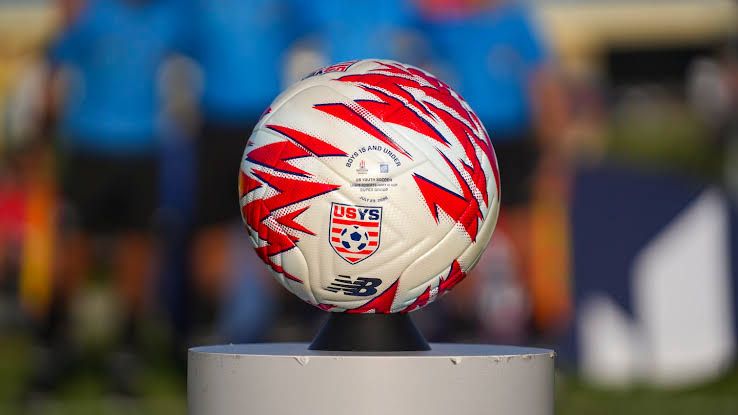
Two-year process begins September 1 as U.S. Soccer takes sole voting membership of US Youth Soccer, with the reform aimed at strengthening grassroots development, coaching, access and player pathways across America
The landscape of youth soccer in the United States has entered a significant new chapter after US Youth Soccer State Associations approved a historic integration with the U.S. Soccer Federation.
The decision, made during the USYS Annual General Meeting in Dallas on August 29, 2026, begins a two-year process designed to bring US Youth Soccer’s extensive grassroots network closer to the national federation. The integration formally began September 1, with U.S. Soccer becoming the sole voting member of US Youth Soccer while both organizations work toward full operational integration.
Rather than representing an overnight restructuring of youth soccer, the move is designed as a gradual transition. USYS brings more than five decades of experience, relationships and local reach, while U.S. Soccer brings national infrastructure, resources and a broader strategic platform.
The central question now is how effectively those strengths can be combined to improve the experience of young players, families, coaches, referees, clubs and leagues.
US Youth Soccer has developed one of the country’s largest youth-soccer networks, with nearly 2.7 million annual player registrations, 54 State Associations, approximately 10,000 clubs and leagues, and a network of nearly one million administrators, coaches and volunteers.
That scale gives the integration significance far beyond an administrative agreement.
For many young players, their first connection with organized soccer does not come through the national team or a professional club. It comes through a local coach, community field, youth league, club, school or State Association.
That local level is therefore where the success of the new structure will ultimately be measured.
U.S. Soccer has said the objective is to bring more resources and investment closer to the communities where soccer is actually played while making the sport easier for families to understand and navigate. The federation also wants to strengthen support for coaches, referees, clubs and leagues and create clearer opportunities for players to develop.
One of the most important elements of the agreement is that State Associations remain central to the process.
The 54 State Associations approved the change, and their local knowledge and relationships are expected to remain an important part of the future structure.
That local-national balance could become one of the defining features of the two-year transition.
For national reform to have a meaningful effect, it has to translate into better services at the local level. The success of the integration will therefore depend heavily on how effectively national resources and strategies are connected with the people and organizations working with young players every day.
The development pathway could also become clearer.
For years, American youth soccer has offered enormous opportunities but has operated through a complicated collection of clubs, leagues, State Associations, schools, academies and national organizations.
U.S. Soccer’s broader pathways strategy has sought to create greater connectivity across this environment.
The integration with USYS now gives the federation a much larger grassroots platform through which that strategy can potentially be implemented.
There are already signs of movement toward greater coordination. Work toward a unified team-based competition structure involving the National League and US Club Soccer’s National Premier Leagues is part of a wider effort to strengthen competition pathways and improve connections between national organizations and local and state leagues.
The latest integration therefore does not stand entirely on its own. It forms part of a wider attempt to make the American youth-soccer environment more connected.
Coaching could become one of the biggest beneficiaries.
Youth development depends heavily on the quality of the people working with players every week.
A talented youngster can have access to excellent facilities and competition, but the quality of daily coaching remains crucial to technical development, decision-making, confidence and enjoyment of the game.
The federation has identified stronger support for coaches and the organizations that serve players as an important potential benefit of the integration.
The opportunity is therefore not simply to create a bigger administrative structure. It is to make better coaching resources available closer to where young players live and train.
That could include improved education, more consistent resources, better access to qualified instructors and stronger connections between local coaches and national development principles.
There is also an important distinction between approval of the integration and completion of the integration.
The vote has happened.
The two-year process has begun.
But the full operational integration has not yet been completed.
U.S. Soccer became the sole voting member of US Youth Soccer on September 1, while the organizations work toward full operational integration over the next two years.
That means supporters should view September 2026 as the beginning of implementation rather than the final product.
This is where constructive scrutiny becomes important.
The success of the project will not be determined by the announcement itself. It will be determined by what players, parents, coaches, referees, clubs and local communities experience during the transition.
If families eventually find registration and competition options easier to understand, that will be tangible progress.
If coaches receive stronger development resources, that will be tangible progress.
If participation becomes more accessible, especially for communities that have historically faced barriers to organized soccer, that will be tangible progress.
And if talented players can move through development pathways without unnecessary confusion, that will be one of the clearest indicators that the restructuring is achieving its purpose.
The timing of the announcement makes the next two years particularly important.
The United States has just experienced an extraordinary period of attention around soccer, with the 2026 FIFA World Cup taking place across the United States, Canada and Mexico.
The challenge for American soccer is to convert that heightened interest into long-term participation and development.
U.S. Soccer has already placed significant emphasis on grassroots growth and expanding access to the sport.
The USYS integration gives that ambition a much larger youth-soccer network through which it can potentially operate.
That creates a major opportunity.
But the opportunity will require disciplined implementation.
The most important measurements should ultimately be practical.
Are more children playing?
Are families finding soccer easier to navigate?
Are coaches better supported?
Are referees receiving stronger development and support?
Are local clubs receiving meaningful resources?
Are talented players finding clearer pathways?
Is the cost of participation becoming more manageable?
Those questions will tell the real story of the integration far more effectively than organizational announcements alone.
The response from State Associations has been broadly supportive, with organizations across different parts of the country describing the move as an opportunity for greater alignment, collaboration, investment and stronger local development.
That response is significant because State Associations will be among the organizations closest to the effects of the transition.
For most parents and young players, however, the identity of the organization running the administrative structure is less important than what happens on the field.
The reaction can therefore be understood around a straightforward expectation: make the game better for the people who play it.
There is also a growing recognition among soccer stakeholders that integration should ultimately be judged by results rather than promises.
Support for the integration and constructive scrutiny are not contradictory. Careful monitoring can help ensure that the project’s stated goals remain connected to the everyday experiences of families and local soccer organizations.
The integration also creates an opportunity to strengthen participation and development across the women’s and girls’ game.
The United States already possesses one of the world’s strongest traditions in women’s soccer, and youth development has been an important part of that success.
A more connected national-to-local structure could help expand access to girls entering the sport, improve coaching resources and create stronger connections between grassroots participation and advanced development.
The key will be ensuring that investment reaches communities rather than concentrating only on already-established soccer markets.
Perhaps the most important test will be accessibility.
U.S. Soccer has said the integration is intended to create more access to play and make soccer easier for families to navigate.
Those goals matter because a thriving youth-soccer system cannot be built exclusively around players who already have easy access to clubs, facilities, transportation and financial resources.
The next two years provide an opportunity to examine whether national resources can help local organizations expand entry points into the sport.
That could mean strengthening community programs, supporting schools, improving coaching availability or helping local organizations create more opportunities for players who are just beginning their soccer journey.
The integration was announced alongside a strong emphasis on grassroots development and collaboration, reinforcing the idea that the future of American soccer is not only about elite competition but also about what happens in communities.
The conversation is therefore not simply about governance.
It is about how the sport is actually delivered.
The next phase will be watched closely over the coming months.
U.S. Soccer and USYS will have to work through the practical elements of bringing their operations closer together while maintaining continuity for players and families.
State Associations will have an important role in translating national priorities into local programs.
Clubs and leagues will need clear communication about any changes that affect their operations.
Coaches and referees will be looking for practical resources and development opportunities.
And families will ultimately want a simple answer to the most important question:
Will this make youth soccer better?
The two-year timeline gives the organizations room to build the new structure carefully rather than attempting to change everything simultaneously.
That measured approach could be an advantage.
The integration of US Youth Soccer into U.S. Soccer represents one of the most consequential structural developments in American youth soccer in decades.
The scale alone makes it significant: a national federation is bringing itself closer to a youth network serving millions of player registrations and thousands of clubs and leagues.
But the real significance will not be found in organizational charts.
It will be found on community fields.
It will be found in the quality of coaching young players receive.
It will be found in whether parents understand their options.
It will be found in whether talented players can identify a clear pathway.
It will be found in whether referees and volunteers receive the support they need.
And perhaps most importantly, it will be found in whether more children can simply play, enjoy and stay in soccer.
For U.S. Soccer, US Youth Soccer and the State Associations, the vote has provided the foundation.
Now comes the harder and more important part: turning that foundation into measurable improvements.
If the organizations can combine national resources with genuine local knowledge while keeping players and families at the center of decision-making, the integration has the potential to become more than an administrative milestone.
It could become a major step toward a more connected American soccer system.
The vote opened the door. The next two years will determine what is built behind it.
As of September 5, 2026, the two-year integration process is underway, having formally started September 1. Full operational integration is still ahead, making the implementation period the most important phase of the project.

