
WASHINGTON, D.C., UNITED STATES — September 5, 2026
President Donald Trump has described the ongoing U.S. military conflict with Iran as “small potatoes,” saying he considers the confrontation a limited military conflict rather than a conventional war.
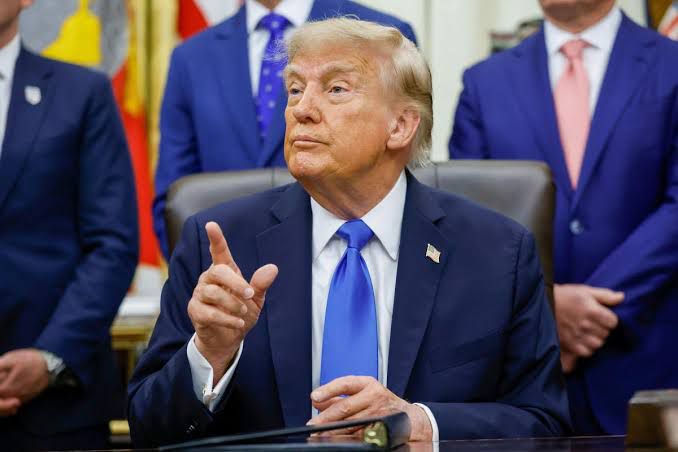
Trump made the remarks on Friday, September 4, while speaking to reporters in the Oval Office. He also defended Vice President JD Vance, who had said a day earlier that he would not characterize the ongoing confrontation with Iran as a war.
Trump said he preferred to describe the situation as a “military conflict,” pointing to what he characterized as intermittent U.S. military action rather than continuous ground combat. He emphasized that the United States has not deployed ground forces into Iran and that the current campaign has largely involved airstrikes and other military operations.
The president’s comments come as the confrontation between Washington and Tehran continues into its seventh month. The conflict began on February 28 and has involved repeated exchanges of strikes between U.S. and Iranian forces.
According to the Associated Press, 18 U.S. service members have been killed during the conflict. The United States has also incurred substantial financial costs from its military operations, with AP reporting that the campaign has cost more than $37.5 billion.
Trump nevertheless emphasized the scale of American military power and argued that the conflict should be viewed in comparison with previous major U.S. wars, including Vietnam and Afghanistan. His assessment was that the current level of U.S. casualties and combat activity was considerably smaller than those earlier conflicts.
The president also said the United States has achieved significant military objectives against Iran, including damage to the country’s nuclear capabilities. Trump has repeatedly stated that Iran will not be permitted to obtain a nuclear weapon during his administration.
The administration’s description of the conflict has become an important part of the political and public discussion surrounding the U.S. military presence in the Middle East.
Vice President Vance told reporters Thursday that he would not use the word “war” to describe the confrontation. Trump subsequently backed that position, saying that what matters to him is the outcome of the military campaign rather than the terminology used to describe it.
Trump also said the United States is not currently engaged in continuous fighting, describing the military activity as intermittent. He pointed to U.S. control of the Strait of Hormuz and ongoing operations against Iranian targets as evidence of the United States’ military position in the region.
The comments come against the backdrop of continued tensions across the Middle East, including Iranian attacks directed at U.S. military positions and American military operations against Iranian targets.
Despite the president’s characterization of the conflict as limited, the death of U.S. service members and the continued deployment of American military personnel have kept the situation firmly on the national-security agenda.
The White House’s position also reflects Trump’s broader effort to frame the conflict around U.S. military strength and strategic achievements rather than the traditional terminology associated with a declared war.
ANALYSIS
Trump’s “small potatoes” description is significant because it establishes how the administration wants Americans to understand the current confrontation with Iran.
The president is distinguishing the conflict from large-scale wars such as Vietnam and Afghanistan. His argument is that the current military campaign is intermittent, primarily conducted through air power and does not involve American ground troops fighting across Iranian territory.
That distinction is central to the administration’s decision not to describe the confrontation as a conventional war. Vance’s comments earlier in the week and Trump’s subsequent endorsement demonstrate a consistent effort by senior administration officials to use the term “military conflict” instead.
At the same time, the situation remains consequential because American service members have lost their lives and U.S. military operations have continued for months.
The president’s remarks therefore place the conflict within two different frames: a limited military operation when compared with America’s largest wars, and a significant national-security campaign because of its duration, financial cost, military casualties and potential implications for the wider Middle East.
Another important element is the administration’s emphasis on Iran’s nuclear program. Trump continues to present the military campaign as part of an effort to prevent Iran from obtaining a nuclear weapon. The president has repeatedly pointed to what he describes as major damage to Iran’s nuclear capabilities as an important measure of the campaign’s success.
The situation also remains closely watched because the conflict’s future direction is uncertain. Continued military activity could influence U.S. relations with Iran, America’s broader Middle East strategy, energy markets and the security of U.S. personnel stationed throughout the region.
For now, Trump’s latest comments make clear that the administration intends to portray the confrontation as a controlled and limited military campaign rather than a traditional war.
WHAT IT MEANS
For the United States, the conflict represents an ongoing military commitment in the Middle East involving American forces and significant national resources.
For U.S. service members and their families, the situation remains a serious operational reality despite the president’s description of the conflict as limited.
For Iran, continued American military pressure represents an ongoing confrontation over security, military power and the country’s nuclear capabilities.
For the wider international community, the continuing U.S.-Iran confrontation remains an important development because of the strategic importance of the Middle East and the potential consequences for regional security and global energy supplies.
Trump’s “small potatoes” remark is therefore likely to remain one of the defining descriptions of his administration’s approach to the conflict: a characterization intended to emphasize the limited scale of the campaign compared with America’s largest wars, while the military confrontation itself continues.
As of September 5, the United States and Iran remain engaged in an ongoing military confrontation, with Washington continuing to describe its actions as a limited military conflict rather than a traditional war.

