
BOSTON, MASSACHUSETTS, UNITED STATES —
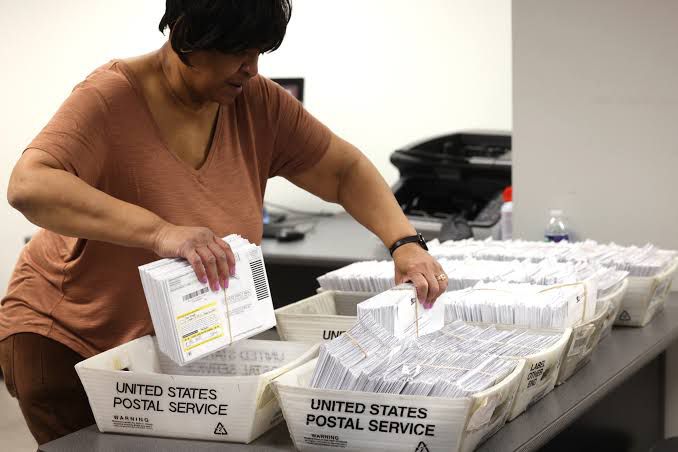
A federal judge in Massachusetts has extended a court order blocking the Trump administration and the U.S. Postal Service from implementing new restrictions on mail-in voting ahead of the 2026 midterm elections.
U.S. District Judge Indira Talwani issued a preliminary injunction on Friday, September 4, replacing an earlier temporary order that had prevented the Postal Service from carrying out key parts of President Donald Trump’s executive order concerning mail ballots. The decision comes as states begin sending absentee ballots to voters for the November 3 midterm elections.
North Carolina became the first state to begin sending statewide mail-in ballots for the 2026 midterm elections on September 4. The timing of the court ruling has therefore placed the federal dispute directly alongside the beginning of the nationwide mail-voting process.
The dispute centers on rules developed following an executive order signed by Trump earlier this year that sought to establish new federal requirements for mail-in ballots.
Under the proposed system, states would be required to provide information about voters receiving mail ballots to a Postal Service-managed system. The administration also sought specific requirements for ballot envelopes, including standardized designs and barcode-related procedures.
The Postal Service has argued that the changes are intended to establish greater consistency in the handling of election mail. The administration has maintained that the measures are designed to strengthen election administration and security.
Judge Talwani’s ruling prevents those requirements from being enforced while the underlying legal dispute continues.
The judge’s decision follows months of litigation over the scope of presidential and Postal Service authority to impose nationwide requirements affecting the administration of federal elections.
At the center of the legal challenge is the question of whether the executive branch and the Postal Service have sufficient authority to impose the new requirements without action from Congress.
The Constitution gives states a significant role in establishing the rules governing elections, while Congress also has authority over federal election regulations. The lawsuits challenging Trump’s order argue that the president cannot independently impose nationwide changes to election procedures through an executive order.
The Trump administration has disputed that interpretation and has continued seeking authority to implement the new system.
The latest ruling represents another stage in an ongoing legal battle that has already reached the Supreme Court. The Supreme Court previously lifted an earlier injunction that had blocked the administration’s plan, allowing the legal dispute to continue while the lower courts considered the underlying issues.
Following Friday’s ruling, the Trump administration indicated that it would appeal the decision to the U.S. Court of Appeals for the First Circuit. The administration has also returned to the Supreme Court seeking permission to proceed with the restrictions before the midterm elections.
The Supreme Court has given opponents until September 8 to respond to the administration’s latest request, leaving the issue active at the highest level of the federal judiciary as states begin distributing ballots.
The timing is particularly significant because election officials are already moving forward with established state-level mail-voting procedures.
North Carolina’s early mailing schedule is required under state law, which calls for absentee ballots to be sent approximately 60 days before Election Day. Other states are expected to begin mailing ballots as their own election calendars reach the appropriate states
The court’s ruling means the Postal Service cannot immediately impose the disputed requirements while the injunction remains in effect.
The legal proceedings therefore create an unusual situation in which election officials are preparing and distributing ballots while federal courts continue to determine whether the administration’s proposed national rules can legally take effect.
ANALYSIS
The latest ruling is important because it places the federal government’s proposed changes to mail voting under judicial review at the precise moment the 2026 election process is beginning in several states.
Judge Talwani’s decision does not determine the ultimate legality of Trump’s executive order. Instead, it prevents implementation of the contested Postal Service rules while the broader legal questions are litigated.
One of the most significant issues is timing.
Election administration involves thousands of state and local jurisdictions, each operating under established laws, deadlines and procedures. Introducing new federal requirements shortly before an election could require election officials to modify systems, ballot designs, voter databases and mailing procedures within a limited period.
The judge’s ruling reflects concerns about whether such changes can be implemented without creating significant disruption to the election process.
The administration, however, maintains that the proposed requirements are manageable and argues that federal standards can improve consistency in the handling of mail ballots.
The Supreme Court’s involvement makes the situation particularly significant. The justices have already intervened once in the dispute, and the administration is now asking the court again to allow its rules to proceed.
That means the legal status of the restrictions could continue to change as the November election approaches.
For voters, the most immediate issue is that existing state procedures remain the operative framework while the injunction is in place. Voters who receive mail ballots should continue following the instructions provided by their state or local election authorities.
For election officials, the ruling provides temporary clarity by preventing the Postal Service from imposing the disputed federal requirements while the court proceedings continue.
For the Trump administration, the case represents an important test of the extent of presidential authority over federal election administration.
For the states, it raises a broader constitutional question about the division of authority between state election officials, Congress, the executive branch and federal agencies.
WHAT IT MEANS FOR THE 2026 MIDTERM ELECTIONS
The 2026 midterm elections are scheduled for November 3, and mail voting is already beginning in some states.
The latest court ruling means the Trump administration’s proposed Postal Service restrictions cannot currently be enforced under the injunction.
However, the legal dispute is not finished.
The administration is appealing the ruling, while the Supreme Court is considering its latest request. Consequently, the legal framework surrounding mail-in voting could continue to develop in the weeks ahead.
For voters, the practical message is to pay attention to official instructions from state and local election authorities, particularly regarding ballot-request deadlines, mailing deadlines and ballot-return procedures.
For the Postal Service, the ruling means that the proposed new federal system remains on hold while the courts consider whether it can legally be implemented.
For Congress, the case highlights the continuing constitutional debate over who has authority to establish nationwide rules affecting federal elections.
The dispute is therefore not simply about postal procedures. It is also about the balance of power between the federal government and the states in administering American elections.
With ballots now beginning to move to voters, the courts are being asked to resolve those questions on an accelerated timetable.
For now, Judge Talwani’s injunction keeps the administration’s contested mail-voting restrictions from taking effect, while the Trump administration continues its appeal and the Supreme Court considers the next stage of the case.

