
WASHINGTON, D.C., UNITED STATES —
The United States Mint has officially begun releasing a new $1 coin featuring President Donald J. Trump as part of the nation’s commemoration of the 250th anniversary of the Declaration of Independence.
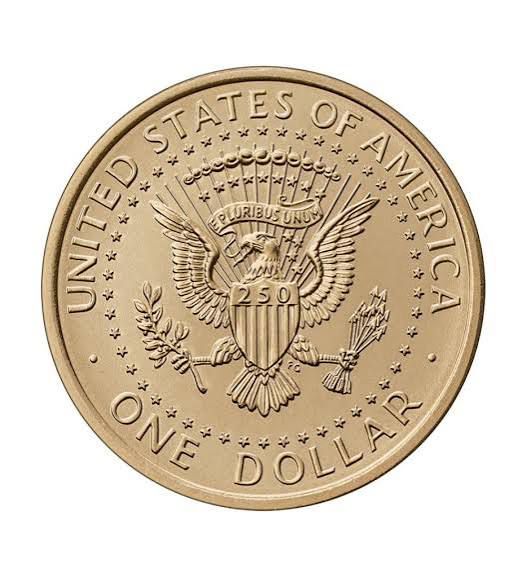
The gold-colored coin, which carries Trump’s portrait on the front and the Presidential Seal on the reverse, represents one of the most notable additions to the United States’ 2026 Semiquincentennial coin program. The U.S. Mint describes the coin as part of the historic celebration of 250 years of American history, liberty and national identity.
The obverse of the coin features a portrait of Trump alongside the inscriptions “LIBERTY,” “IN GOD WE TRUST” and “1776 ~ 2026.” The portrait was designed by United States Mint Chief Engraver Joseph Menna and was inspired by an official White House photograph taken by Daniel Torok.
On the reverse, the coin carries the Presidential Seal, including the eagle, shield, olive branch and arrows, together with the traditional inscription “E PLURIBUS UNUM.” The design connects the presidential image with the broader symbolism of the American republic and the country’s 250-year milestone.
The Mint began selling the coins on September 2, 2026, with the pieces being offered in rolls and bags through the United States Mint. A roll contains 25 coins and is priced at $61, while a 100-coin bag is priced at $154.50. The coin itself carries a denomination of $1 and is legally recognized as U.S. currency.
The coin is gold-colored, but it is not made of gold. Its composition is consistent with the copper-based materials used for circulating dollar coins, giving it the familiar golden appearance associated with modern U.S. $1 coins.
One particularly interesting feature of the release is the inclusion of special “July 4th” versions. The U.S. Mint says 250,000 Trump $1 coins were struck on July 4, 2026, carrying a special “July 4th” privy mark. These special pieces have been randomly included among the bags and rolls made available through the Mint.
The release forms part of a much broader national coin program created for America’s Semiquincentennial. Throughout 2026, the Mint has introduced special designs across several denominations, including the nickel, dime, quarter and half dollar, giving Americans an opportunity to encounter anniversary-themed coinage in everyday circulation.
The Trump $1 coin, however, occupies a particularly distinctive position within the program because it places the portrait of a living president on a U.S. coin.
Federal law generally provides that portraits appearing on U.S. currency and securities must depict deceased individuals. The U.S. Code also contains specific restrictions concerning presidential images on coins issued under the regular Presidential $1 Coin program.
The 2026 Semiquincentennial legislation, however, created a separate framework allowing the Treasury to issue special $1 coins during the 250th-anniversary year with designs emblematic of the American Semiquincentennial. Treasury officials have relied on that anniversary authority in proceeding with the Trump coin.
Treasury Secretary Scott Bessent has also pointed to historical precedent in defending the decision. In 1926, President Calvin Coolidge appeared on a commemorative coin associated with the 150th anniversary of American independence. That historical example has become an important part of the explanation surrounding the 2026 issue.
The legal discussion surrounding the coin therefore centers on the distinction between the longstanding rules governing presidential coinage and the special authority established for the 250th-anniversary program. The regular Presidential $1 Coin program was designed around portraits of presidents in the order they served, with restrictions concerning living presidents, while the 2026 Semiquincentennial program operates under separate anniversary legislation.
The significance of the Trump $1 coin extends beyond its monetary value. Its release places a contemporary presidential portrait directly within a national commemoration of American independence, making the coin both a piece of currency and a historical artifact associated with the 250th anniversary of the United States.
For collectors, the coin is particularly noteworthy because it combines several elements rarely seen together in modern American coinage: a living president, a major national anniversary, the Presidential Seal and a dual date marking 1776 and 2026.
The special July 4th privy-mark coins add another layer of collector interest. Because only 250,000 were struck with the special marking, collectors are expected to pay close attention to rolls and bags in search of these examples. The Mint’s decision to distribute them randomly also gives ordinary purchasers the possibility of discovering one among standard coins.
The coin also demonstrates how the United States is using its circulating and collectible coinage to tell the story of the nation during its Semiquincentennial year. Rather than limiting the celebration to commemorative medals or museum pieces, the 2026 program places anniversary designs directly into the nation’s monetary system.
For the public, the most important distinction is between the coin’s face value and its collector-market value. The denomination is $1, meaning the coin has a legal-tender value of one dollar. However, the Mint’s packaged rolls and bags are being sold above their face value, reflecting their status as numismatic products and the costs associated with producing and distributing them through the Mint’s sales program.
The introduction of the Trump $1 coin is therefore likely to remain an important part of the historical record of the United States’ 250th anniversary. Whether viewed primarily as currency, a presidential collectible or a symbol of the 2026 national celebration, the coin has already established itself as one of the most distinctive pieces in the Semiquincentennial program.
For Americans, the release provides another physical reminder of the country’s 250-year journey from the Declaration of Independence in 1776 to the United States of 2026.
For collectors, it creates a new modern dollar with significant historical interest, particularly because of the presidential portrait and the limited July 4th privy-mark versions.
For the U.S. Mint, the coin represents a major

