
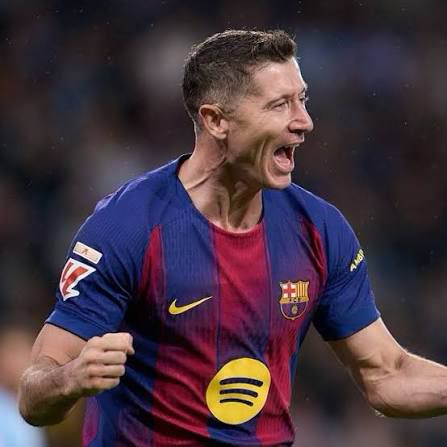
Barcelona’s internal planning for the present and future is increasingly being shaped without Robert Lewandowski as a central reference point in attack, a development that quietly signals a major turning point at the club. While the Polish striker remains one of the most decorated and reliable goal scorers of his generation, the reality inside the club suggests that Barça are gradually preparing for life beyond him as their attacking focal point.
Lewandowski’s impact since arriving at Barcelona has been undeniable. He brought authority, elite finishing, and a winning mentality to a young and evolving squad, playing a decisive role in restoring competitiveness during a difficult transitional period. However, football at the highest level moves quickly, and at 37, the club’s sporting department is aware that long-term planning cannot revolve around a striker nearing the final stretch of his career, regardless of his pedigree.
Under Hansi Flick, Barcelona’s tactical identity is beginning to evolve. Flick’s system places heavy emphasis on intensity, pressing from the front, fluid movement, and positional rotations across the attacking line. While Lewandowski remains a lethal presence in the box, his profile does not fully align with the long-term physical and tactical demands of a high-tempo, pressing-based system. As a result, Barcelona’s recruitment strategy and internal discussions are increasingly focused on younger, more dynamic attacking profiles who can lead the line for years to come.
This shift does not mean Lewandowski has suddenly become expendable. On the contrary, he is still viewed as an important asset in the short term, both for his goals and for the experience he brings to a youthful squad. What has changed is the strategic horizon. Barcelona are now designing their attacking future around players who can offer mobility, adaptability, and tactical flexibility, rather than a traditional, fixed-number nine.
There is also a financial dimension to this transition. Barcelona’s ongoing need to balance competitiveness with sustainability means that high wages and aging profiles are carefully assessed. Planning without Lewandowski at the center allows the club to explore more cost-effective solutions, whether through internal development, market opportunities, or a gradual redistribution of attacking responsibility among multiple players rather than a single star striker.
Young attackers and versatile forwards are already being considered as key pillars of the next attacking cycle. The idea is not simply to replace Lewandowski with a like-for-like signing, but to redefine how Barcelona attack altogether. Goals are expected to come from different zones, with midfielders, wingers, and full-backs all contributing more consistently, reducing dependence on one central figure.
For Lewandowski, this moment represents a natural phase in an elite career rather than a sudden decline in status. His professionalism and output still command respect, but Barcelona’s long-term vision is clearly shifting. The club appears determined to ensure that when the time comes for Lewandowski to step aside, the transition will be smooth, planned, and aligned with a broader tactical evolution.
Ultimately, Barcelona planning without Lewandowski as the central attacking figure is less about moving on from a legend and more about embracing the future. It reflects a club trying to learn from past cycles, prioritizing continuity over abrupt change. Whether Lewandowski remains a key contributor this season or gradually sees his role adjusted, one thing is clear: a new chapter in Barcelona’s attacking identity is already being written.

